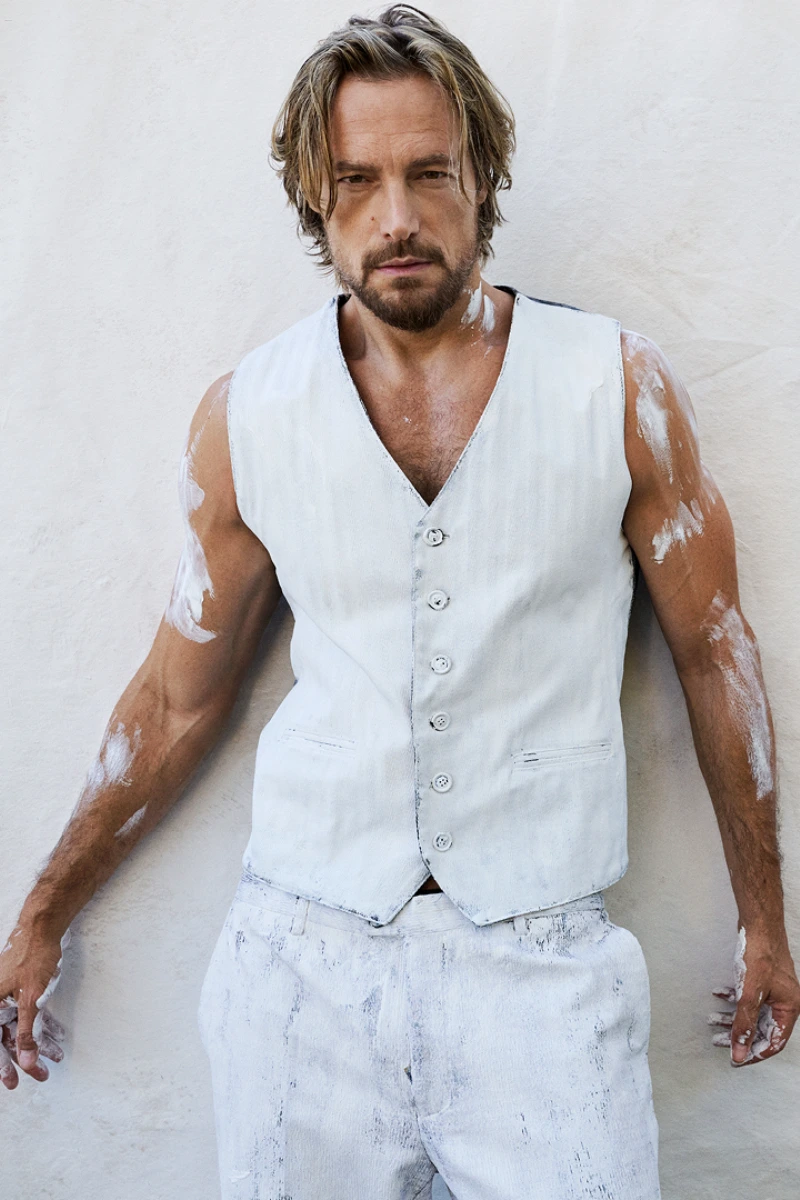


Gabriel Aubry is one of the most recognisable faces in international fashion, with a career spanning more than two decades appearing in campaigns for houses such as Versace, Hugo Boss and Calvin Klein.
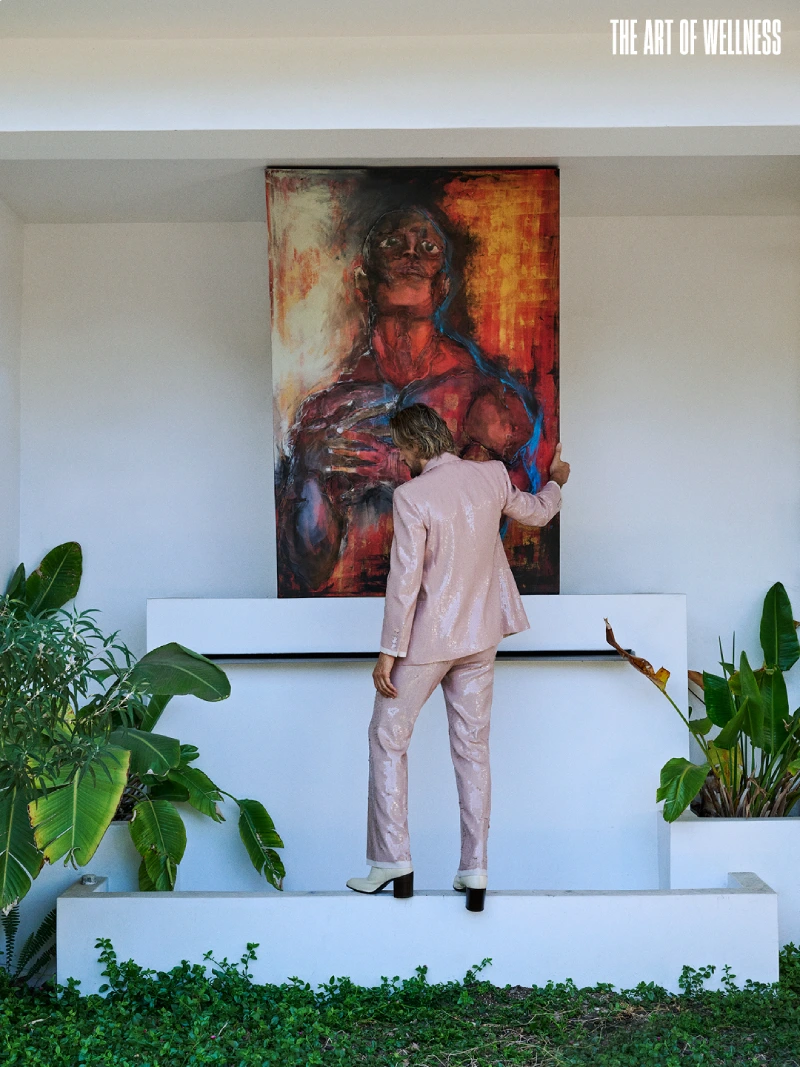
‘Modelling taught me how the world sees me. Art taught me how I see my self’
Now, having recently turned 50, he remains committed to the physical discipline that defined his modelling career while pursuing another longstanding passion: painting.
His evolution from international model to artist offers a more interesting perspective on longevity than that of simply trying to stay young. For Aubry, staying vital appears to be as much about curiosity and creative expression as it is about fitness and physical health.
We met Aubry in Los Angeles to talk about his approach to wellness, the role of art in his life, and what he has learned about staying engaged, active and curious.
You’ve described yourself as visual from a young age. What did the world of images give you as a child that words perhaps did not?
I’ve always processed things visually. Even as a kid, I could remember how to get somewhere after going there once, but sometimes I’d have to actually picture a word in my head to remember it. I was always doodling, and I collected comic books mostly because I loved looking at the artwork.
I don’t know that I understood any of that at the time. It was simply how my mind worked. Images didn’t necessarily need an explanation for me. I could look at something and immediately connect with it without having to understand why.
As I got older, that instinct became more developed. Working with photographers made me pay attention to images differently, and discovering artists like Egon Schiele and Gustav Klimt showed me just how much could be communicated visually without saying anything at all.
I think that’s still what attracts me to art today. Sometimes I understand what I’m feeling visually before I know how to put it into words.
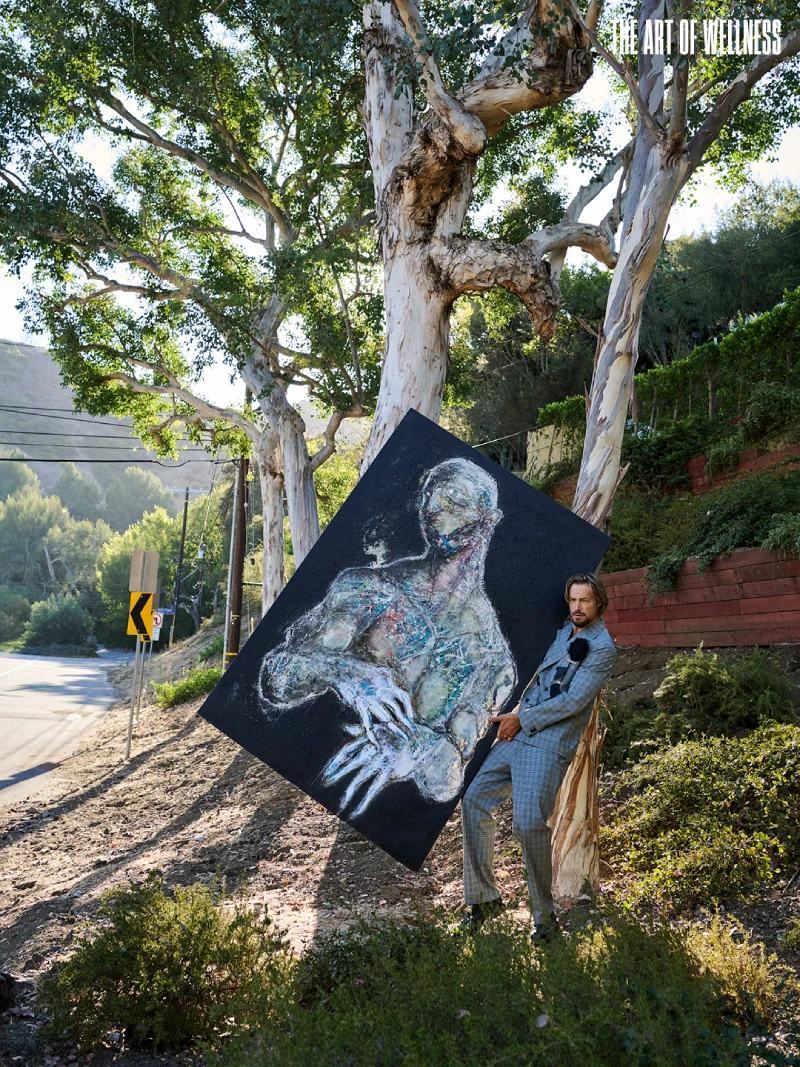
‘For years I was the subject of someone else’s vision. Painting gives me a chance to discover my own’
Has your relationship with your body changed over the course of your modelling and artistic career, and how has that impacted your idea of wellbeing?
When I was younger, my body was my profession, so naturally I became very aware of how it was perceived, but over time I realised there’s a difference between taking care of your body and allowing it to define your identity.
Painting shifted that perspective. A canvas doesn’t care what you look like. It asks for your attention, your curiosity and your honesty.
I still train because I want to feel healthy and strong — not to preserve an image, but to have the energy to create, to keep learning and to be present for the people I love, especially my daughter. Modelling taught me how the world sees me. Art taught me how I see myself.
You spent part of your childhood in foster care. What feels important for people to understand about that experience beyond the assumptions they may bring to it?
I think the first thing is that there isn’t one foster care experience. Mine was complicated, and my understanding of it has changed a lot as I’ve gotten older.
As a kid, I didn’t want to be there. I came from a family of nine children, and several of us were placed in different foster homes. I spent a lot of those years hoping that if I behaved well enough, worked hard enough and somehow did everything right, maybe I would eventually go home. Looking back, I think a lot of my perfectionism and competitiveness probably started there.
What’s interesting is that becoming a father completely changed the way I looked at that period of my life. I eventually understood that being taken back home might not have been the better outcome I imagined it would be as a child. That took me a long time to understand.
I don’t look at foster care as something that defines me, and I don’t want people to feel sorry for me because of it. It was simply part of my beginning, and like most difficult experiences, I think you understand it very differently once you’ve lived long enough to look back at it from the other side.
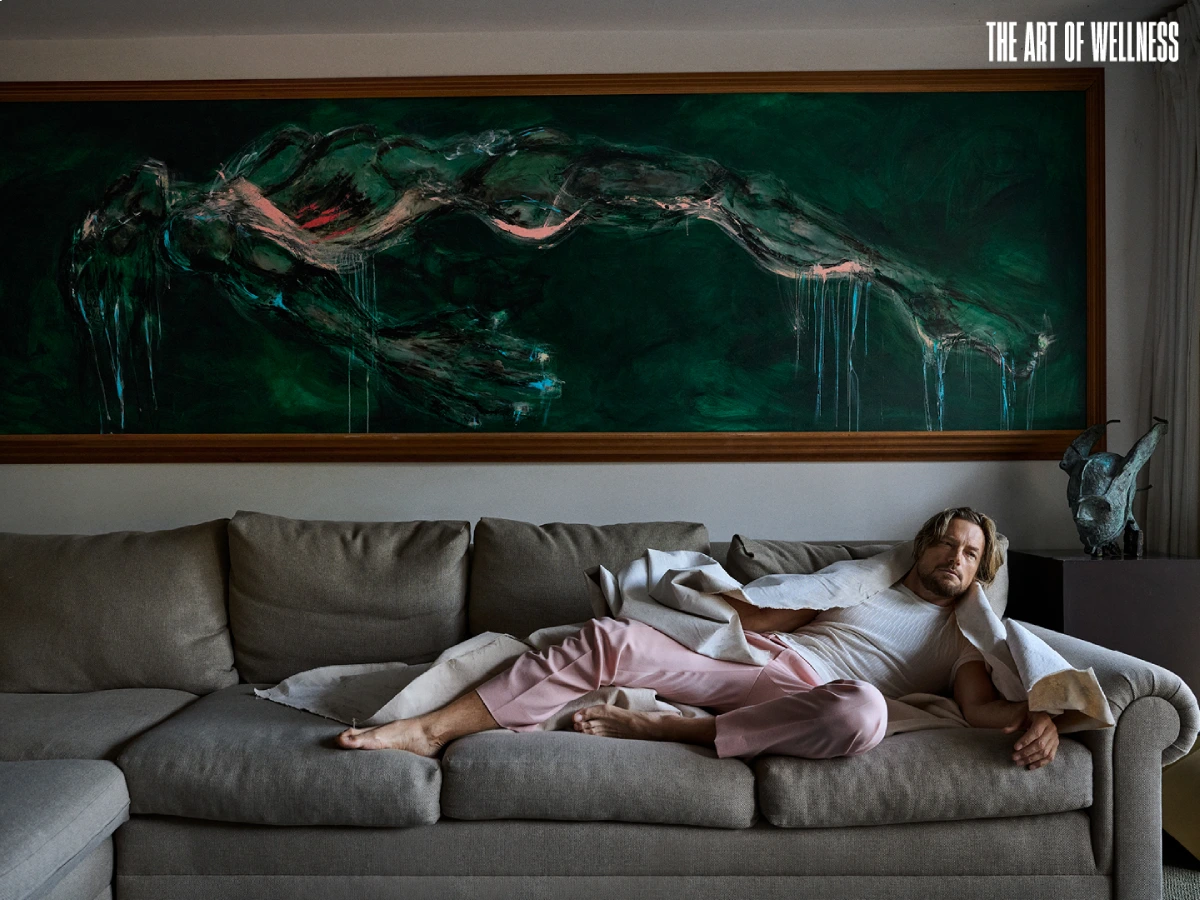
‘I don’t recharge by escaping the world. I recharge by becoming curious about it.’
Were there particular routines, creative outlets or relationships that gave you a sense of steadiness during those years?
I think I learned pretty early how to be comfortable on my own. I moved through different homes and environments, so I didn’t really have one person or one place that represented stability for me. In some ways, I had to create that for myself.
Drawing was always there. I was constantly doodling or looking at images, but I don’t think I consciously thought of it as an escape or even a creative outlet at the time. It was just something I naturally did.
Looking back, I think the real sense of steadiness came from becoming very self-reliant. When your surroundings can change, you learn to depend on the things you can carry with you — your imagination, your interests, and eventually your own sense of who you are.
I think I became comfortable with solitude because, for a long time, I had to be. Eventually, it became something I genuinely valued.
When you’re in a creative flow, what happens to your stress levels?
Years ago, I was introduced to a psychological concept called reciprocal inhibition: the mind can’t be calm and anxious at the same time. That idea completely changed the way I think about stress.
It didn’t eliminate stressful situations, but it changed my relationship with them. Instead of assuming I had to react, I began reminding myself that I still had a choice in how I responded. I don’t always get it right, but that shift in awareness has helped me more than almost anything else. Painting reinforces that lesson. It demands my full attention. The more attention I give to what’s in front of me, the less room there is for anxiety to take over.
What would you want a young person navigating instability, selfdoubt or a difficult start in life to know about the possibility of change?
I think I would tell them that where you start doesn’t have to determine where you end up.
When you’re young and going through something difficult, whatever is happening around you can feel like your entire world because you don’t have enough distance yet to imagine something different. I certainly couldn’t have predicted the life I would eventually have.
I also wouldn’t tell someone that every difficult experience happens for a reason. I’ve never really believed that. Some things are simply difficult and unfair. But I do believe you get to decide what you carry forward from them.
For me, some of the things that probably developed out of instability — independence, competitiveness, discipline, even perfectionism — became qualities that helped me later in life. I just had to learn how to use them rather than let them control me.
Your beginning is part of your story. It doesn’t have to become the definition of it.
Modelling puts a microscope on the body; art can be more internal. How have these two worlds shaped the way you see yourself?
One of the things I continue to appreciate most about modelling is the opportunity to collaborate with extraordinary photographers. What fascinated me wasn’t just the final image. It was realising that every photographer could look at the same person and somehow see something completely different. For years I was the subject of someone else’s vision. Painting gives me a chance to discover my own.
Have you ever felt your public image was at odds with how you were feeling inside, and how did you navigate that tension?
When your work is public, people naturally form opinions based on the small part of your life they have access to. Over the years, I’ve learned that you have very little control over how other people choose to interpret your story. What you do have control over is whether you continue living in a way that feels honest.
One of the most freeing realisations I’ve had is that people usually aren’t thinking about us nearly as much as we imagine they are. Once I understood that, I stopped feeling responsible for managing every perception and focused instead on becoming the person I wanted to be.
You speak warmly about your daughter’s uninhibited creativity. What has she taught you about confidence, emotional openness or the freedom to be oneself?
When my daughter was little, I loved watching her draw and paint. There was no hesitation. She wasn’t thinking about whether something was good or bad, or whether someone else would like it. She just created.
That always fascinated me because I think we slowly lose some of that freedom as we get older. We become more aware of judgment, expectations and our own insecurities, and eventually we start putting limitations on ourselves that weren’t there before.
Watching her made me realise that confidence isn’t always about becoming more certain of yourself. Sometimes it’s about removing some of the things you’ve learned to be afraid of.
I still struggle with that in my own work. I can overthink, analyse and want everything to be exactly right. She reminded me that creativity also requires letting go.
You’ve spoken about finding peace in nature. What does being outside do for your state of mind that a gym or studio can’t?
To be honest, I probably connect more with museums, art galleries and bookstores than I do with nature. My curiosity has always been drawn to photographs, paintings, drawings, sculptures and the work of other artists. I can spend hours walking through a museum or gallery without realising how much time has passed.
For me, wellbeing isn’t tied to a particular place. It’s tied to curiosity. I don’t recharge by escaping the world. I recharge by becoming curious about it.
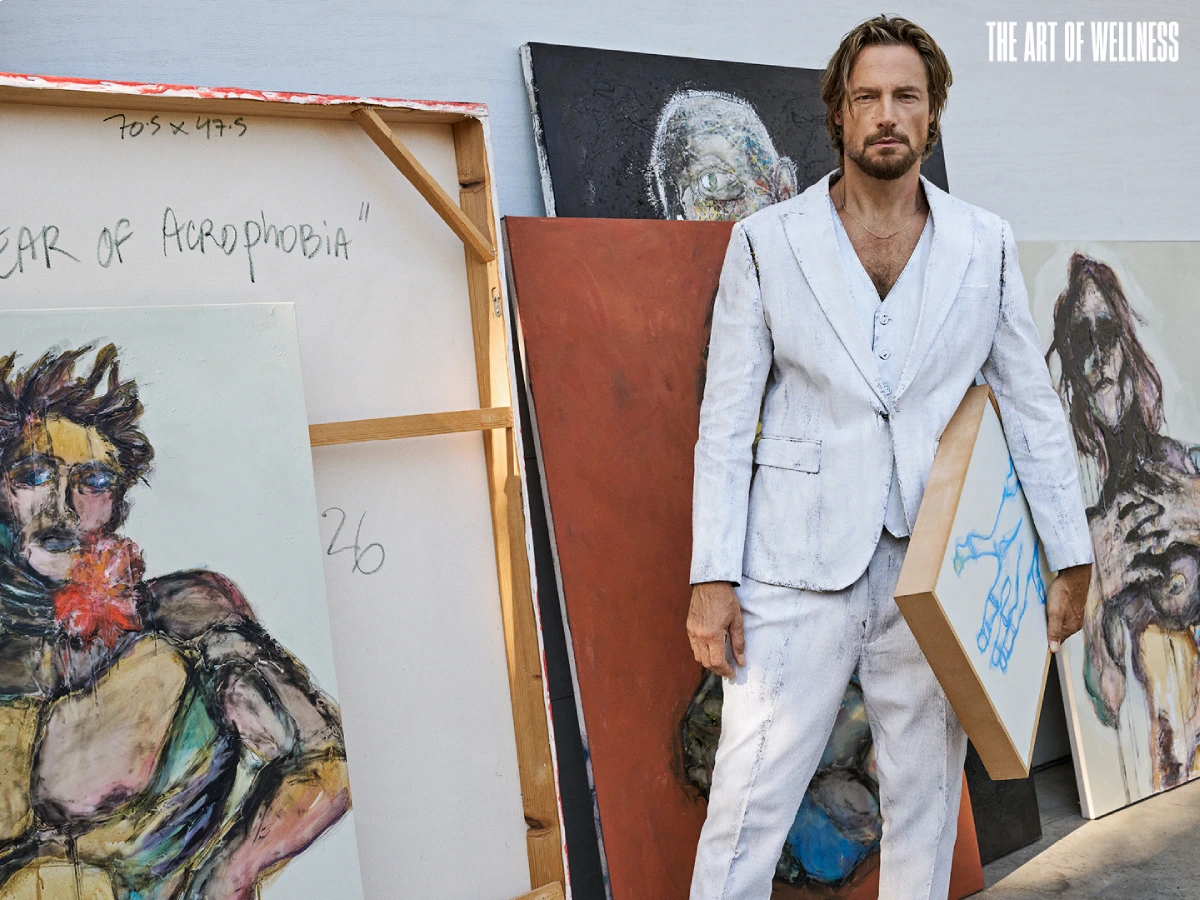
Wellness is often framed as discipline; creativity is often framed as freedom. How do you reconcile those two in your routine?
I’ve never thought discipline and freedom were opposites. I actually think discipline creates freedom. The more time I spend learning my craft — whether it’s painting or training — the more freedom I have to trust my instincts.
Even my painting process reflects that balance. I’ll spend hours carefully building an image before pouring molten wax over it, knowing I can’t completely control what happens next.
Somewhere between intention and surrender is where the work begins to feel alive.
Can you recall an artwork, book or conversation that shifted how you think about self-care or healing?
When my daughter was little, I’d sit and watch her draw or paint for hours. She never questioned herself. She wasn’t worried about whether it was good enough. She simply created. Watching her reminded me of something I think many artists spend a lifetime trying to recover.
I still catch myself overthinking. There’s a phrase I’ve carried with me for years: “Analyse, paralyse.” It’s a simple reminder that there comes a point where thinking more doesn’t improve the work. It only delays it.
When you look at the life you are building now — as an artist, father and person — what does it mean to create a life that feels truly your own?
I think it means becoming more comfortable with who I am rather than who I think I’m supposed to be.
For a long time, different parts of my life came with expectations — some from other people and plenty that I put on myself. The older I get, the less interested I am in trying to fit everything into a particular idea of what my life should look like.
Being a father has probably influenced that more than anything. It changed what I value and how I think about time. Art gives me another kind of freedom because there isn’t a finish line. I can keep learning, experimenting and changing direction.
At this point in my life, creating something that feels truly mine isn’t about reinventing myself. It’s actually the opposite. It’s about becoming more comfortable with the person who was already there.
What is wellness to you?
For me, wellness isn’t a destination. It’s a practice. It’s taking care of your body so it can support your mind. It’s remaining curious enough to keep learning. It’s making time for creativity, movement and loved ones.
The older I get, the less interested I become in perfection and the more interested I become in awareness. If I can continue creating, continue learning and remain present for the people I love, I think that’s a life well lived.
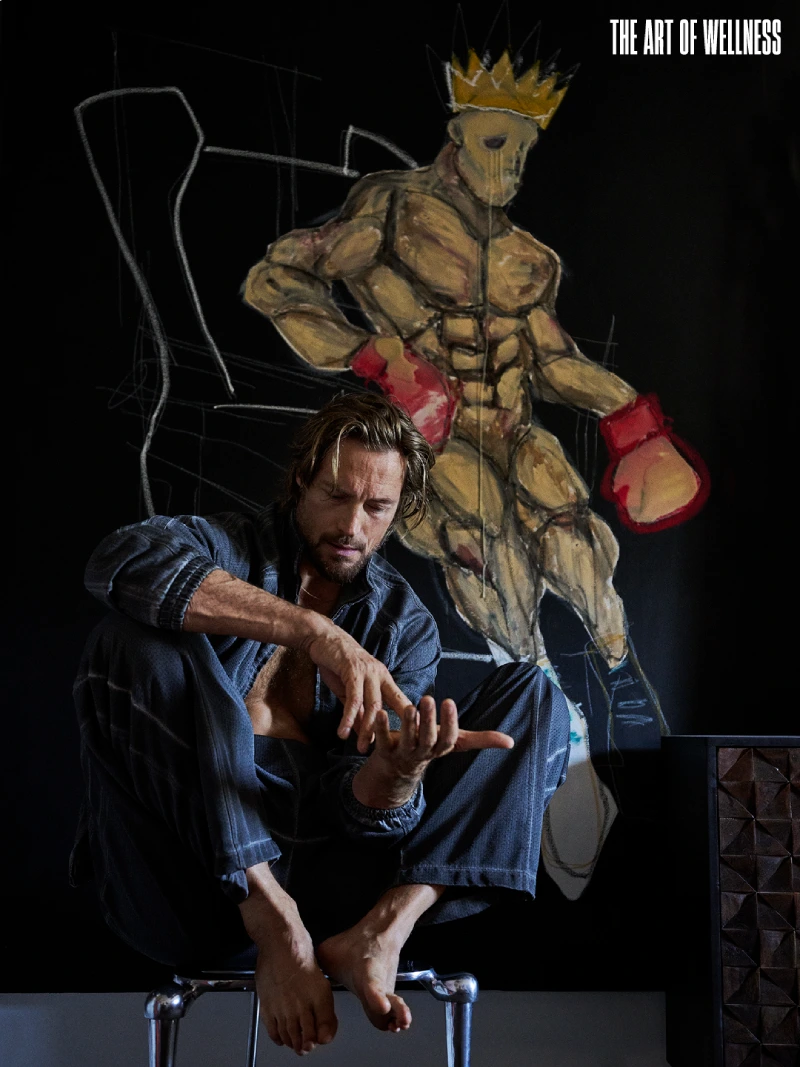
Photographer: Branislav Simoncik
Creative Director / Stylist: Paris Libby
Grooming: Teddy Charles