










At Gaggan in Bangkok, the 14-seat restaurant named multiple times by Asia’s 50 Best Restaurants as Asia’s best, music shifts with every dish: maybe AC/DC, then Dua Lipa, then Eminem.
Meanwhile, some courses arrive balanced on a finger of smoked stone; others you eat with your hands. A tiny painted vessel holds something that smells of cardamom and char.
At the restaurant’s helm, Chef Gaggan Anand calls eating here “a culinary adventure of the senses”. What he has built is less a restaurant, more a manifesto that says how food looks, feels and arrives can change our perception of what it actually is. This may explain why so many of Gaggan’s customers happily chomped on rat meat, an ingredient the restaurant became known for serving.
Restaurants have long provided more than just food. At Maido, which has topped The World’s 50 Best list, chef Mitsuharu “Micha” Tsumura told The Art of Wellness, “We have created our own world, a world where it is not only about cooking: we work a lot on the service, on the staging of the restaurant and on the vibe. Maido is a place of celebration.” The restaurant’s name is a Japanese phrase that means thanks for coming back, and Tsumura says he wanted that ethos to resonate with every guest.
‘If you’re not cooking the meal and it’s just presented to you, your first experience of having that meal is seeing it with your eyes’
– Chandni Gudka
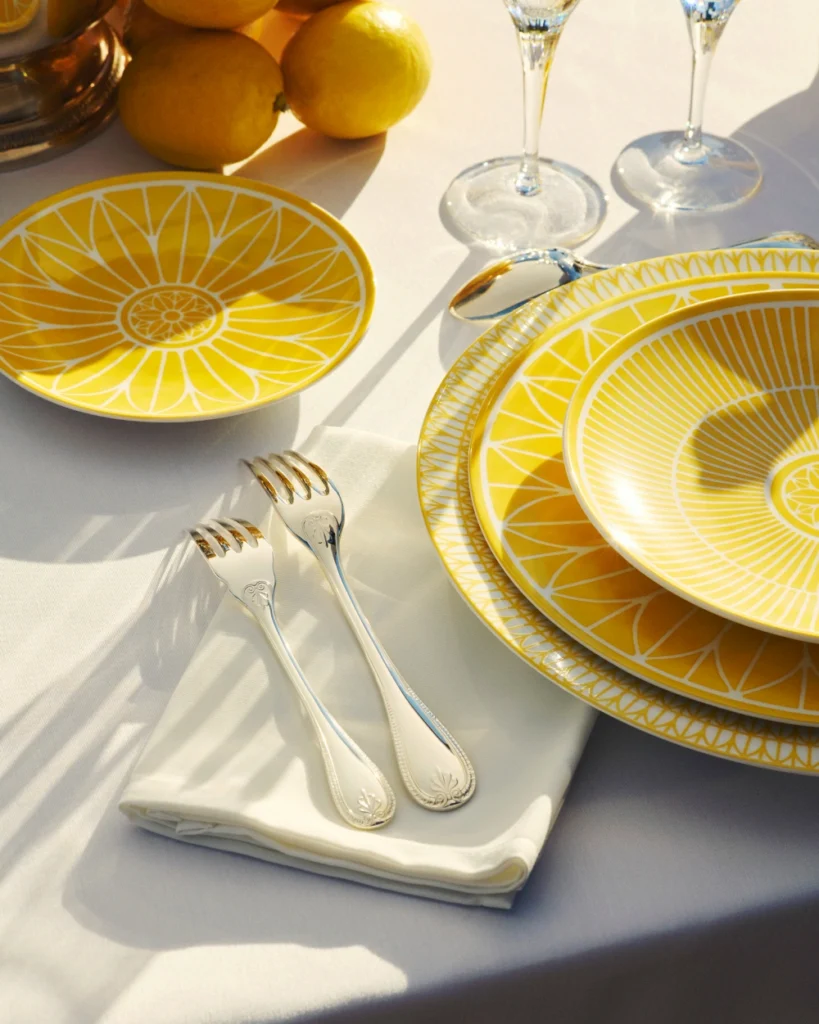
But you don’t need a reservation for any of this. The table at home can just as easily be turned into an event for the senses, whether for an intimate weeknight dinner for two or for a joyful sprawling lunch for family and friends.
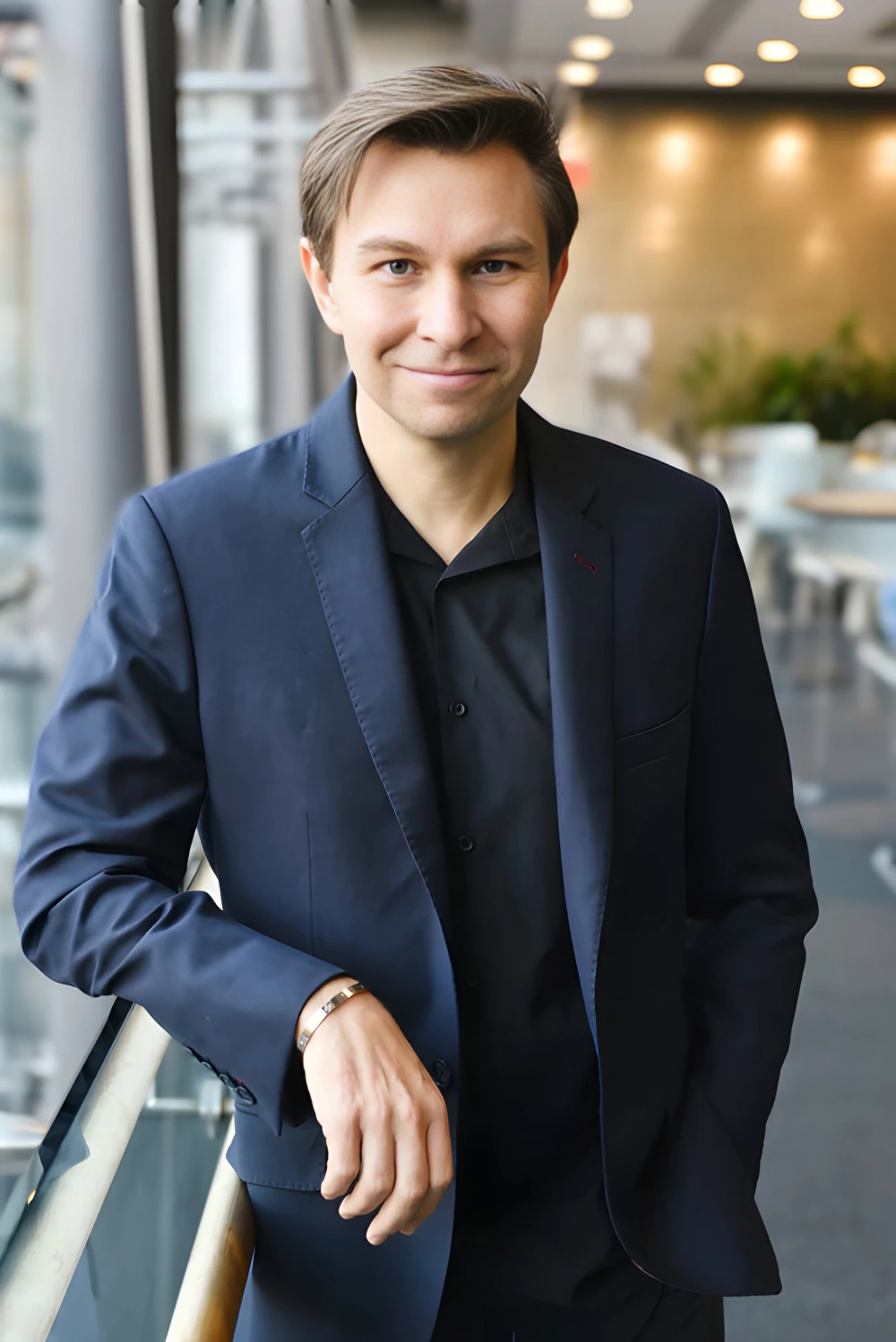
Chandni Gudka knows this better than most. The London-trained chef has cooked for private clients across the world, including for the Prince of Monaco, and also worked as a food stylist. She now runs a private kitchen in Hong Kong. Plating, she says, is where everything going into a meal converges and, for her clients, can be almost as important as the food. “If you’re not cooking the meal and it’s just presented to you, your first experience of having that meal is seeing it with your eyes,” she says.
The hours before, the prep, the timing, the ingredients, all the elements of making the meal, are invisible. The plate is what the diner receives, so “that’s the bit that’s remembered”.
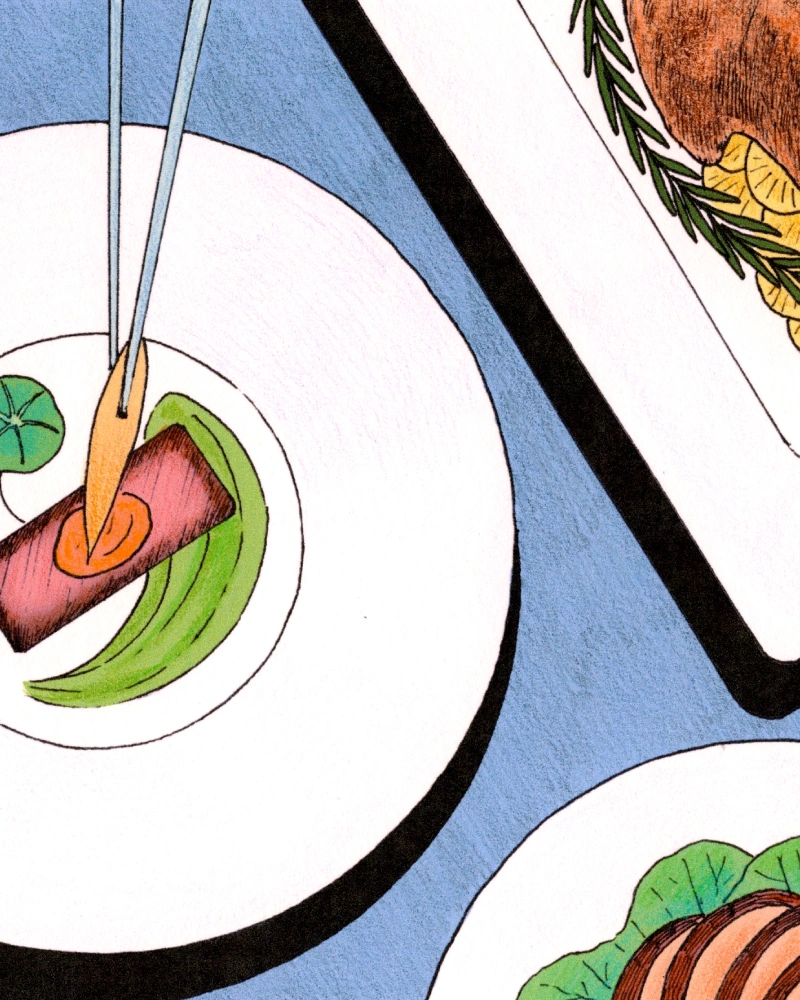
Presentation isn’t just decoration. It’s communication, telling the brain what to expect before the tongue is even engaged. In chef school, Gudka was taught to plate in odd numbers, using three elements, not four, because the eye finds asymmetry more naturally satisfying. Height matters too because something must break the plane of the plate and give the eye somewhere to travel. Good presentation tracks. “Where does your eye go first? What does it see first? And then where does it go?”
This compositional thinking belongs as much to photography as cooking. The Instagram era has made visual literacy at the table a modern non-negotiable. The science, as it happens, agrees. In 2014, Oxford professor Charles Spence found that heavier cutlery measurably changed how food was perceived. Diners eating with weightier flatware rated the same dish as tasting better and said they’d pay more for it. He also demonstrated that plate colour and shape influence flavour perception, where white and round suggest sweetness and dark and angular suggest more intense flavours.
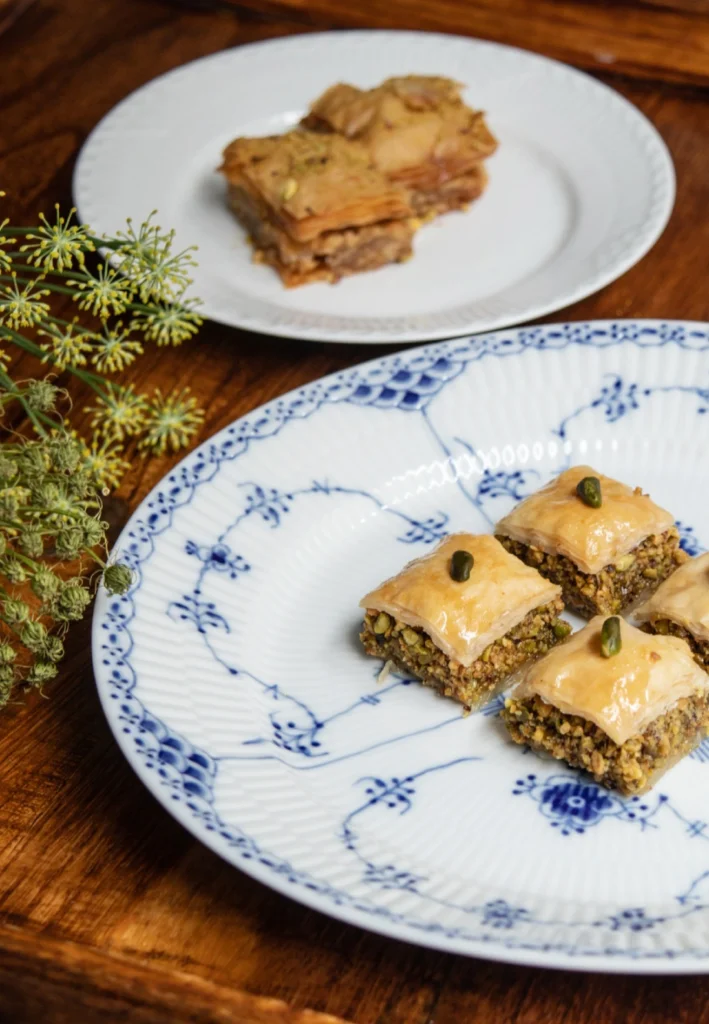
Which is where dining objects themselves enter the conversation. A Lalique crystal centrepiece refracts the evening light and imbues the space. Pick up a Christofle fork, cool to the touch, weighty in the hand, and it somehow adds gravitas to the act of mere eating. And then there is the plateware. Take Royal Copenhagen, whose Blue Fluted porcelain has been hand-painted since 1775. Sariya Liza Neilson Nilwan, founder of La Maison Rose and Hong Kong’s only retail stockist of the brand, describes the experience of pairing pieces with food as one of quiet ritual and attentiveness. “When you pay attention to your food and handle pieces lovingly, they can make meals both appetising and visually appealing.”
Occasionally, though, not even food is required. Neilson knows one collector who gazes longingly at her Royal Copenhagen collection every night before bed. Some hungers, it turns out, have nothing to do with appetite.