
















Somewhere in the Ecuadorian jungle, a group of high performers is sitting in ceremony with indigenous healers, continuous glucose monitors strapped to their arms and epigenetic age tests waiting back at the lodge.
This is Unlimited Life, the year-long longevity programme designed by Dave Asprey, founder of Bulletproof Coffee and a pioneer of the modern biohacking movement. It pairs 500-point biomarker workups and neurofeedback sessions with immersive journeys into ancient environments.
“The spiritual component isn’t separate from the biology component,” Asprey says. “You need both to get the results you want. When you stop running on fear and start running on something else, your biomarkers change.”
Meanwhile, at Armonia Spa inside Pueblo Bonito Sunset Beach Golf & Spa Resort in Los Cabos, a different transformation is underway. The Armonia & Mezcal Ritual is an 80-minute treatment built around mezcal’s anti-inflammatory properties, applied through a handcrafted organic body cream, followed by the rebozo, a traditional woven shawl used to rock, wrap, and stretch the body in a technique passed down through generations of Mexican women.
“This treatment is a journey that reconnects the body with the elements and honours centuries of cultural healing,” says Spa Director Montserrat Maldonado.
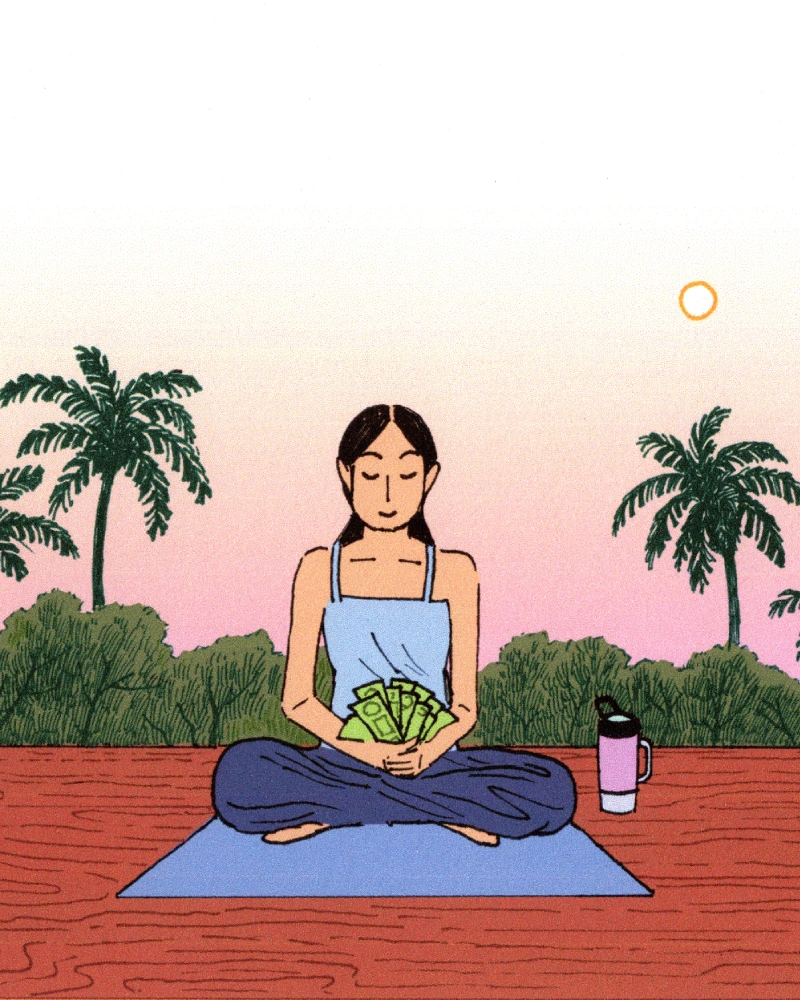
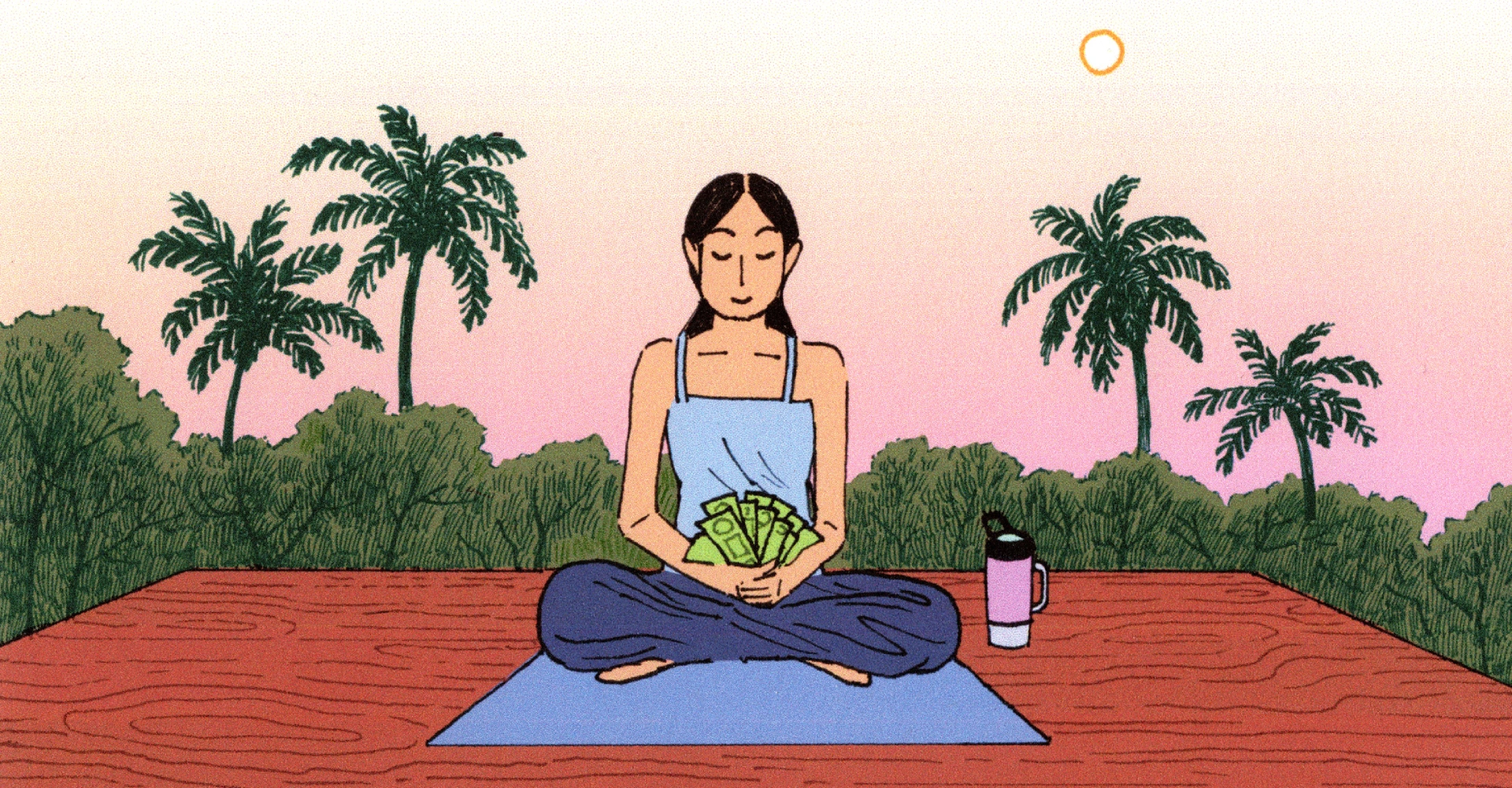
Whether jungle ceremony or natural ritual, ancient shawl or mitochondrial panel, these are not fringe offerings any more. Welcome to the new wellness economy. It smells like mezcal, it runs on data, and it is worth US$6.8 trillion.
The Numbers that Explain Everything
That figure comes from the 2025 Global Wellness Economy Monitor compiled by Global Wellness Institute (GWI). The wellness market has doubled since 2013 and grew 7.9 percent from 2023 to 2024, now larger than sports, IT, tourism, and the green economy combined, and nearly four times the size of the global pharmaceutical industry.
Human beings collectively spent more money last year on staying well than on getting better. That is a genuinely new thing in economic history.
GWI Senior Research Fellow Katherine Johnston points to a fundamental shift in consumer psychology. “There has been a sea change in consumer mindsets, with prevention, mental health, social connection and nature becoming dramatically more important all over the world,” she says.
The industry is forecast to grow at 7.6 percent annually through 2029, approaching $10 trillion. “Younger generations prioritise mental wellbeing in a way that is driving real structural change in the industry,” Johnston says.
From the Doctor’s Office to the Dinner Table
One of the most significant shifts is the migration of wellness from reactive to preventive. People are not waiting to get sick. They are tracking sleep, testing their microbiome and wearing continuous glucose monitors. Public health, prevention and personalised medicine grew 15.2% annually from 2019 to 2023, outpacing almost every other wellness sector.
Nothing has reshaped the economy more dramatically than a weekly injection. GLP-1 medications like semaglutide and tirzepatide arrived as diabetes treatments and became a cultural phenomenon. According to FAIR Health, a nonprofit database of health insurance claims, prescriptions among overweight or obese adults increased several-fold between 2019 and 2024, and use among those without diabetes has climbed sharply as these drugs are increasingly prescribed for weight management.
Dr Gillian Goddard, a board-certified endocrinologist and adjunct assistant professor of medicine at NYU Grossman School of Medicine, calls them “a paradigm-shifting class of medications” but urges caution. “I have also seen how they have harmed some people, especially when prescribed inappropriately and without appropriate surveillance,” she says.
The drugs are reshaping what consumers expect from their health, and that expectation is bleeding into every other part of the market.
The Serum in Aisle Seven
Go to any drugstore and spend five minutes in the skincare aisle. You will find niacinamide, retinol, hyaluronic acid and peptides sitting next to the shampoo, ingredients that not long ago you would have encountered only in a dermatologist’s office.
Skincare dollar sales rose about seven percent in the first half of 2024, making it the fastest-growing beauty category by units sold, up 10 percent year over year, according to market research firm Circana. Nearly 54 percent of beauty consumers now buy SPF products, with 63 percent using them daily.
Ingredient literacy is driving the boom. Social media has created an audience of millions who know what a ceramide does and will check the concentration of an active before they buy. Beauty has effectively become a form of preventive health.
Why We Travel Differently Now
The global wellness tourism market was valued at approximately $954 billion in 2024 and is expected to reach $1.68 trillion by 2030, growing at nearly 10 percent a year. Between 2023 and 2024 alone, it grew 13.8 percent making it one of the standout performers across the entire wellness economy.
What travellers are seeking is not a spa day bolted onto a beach holiday. Forest bathing, geothermal soaking, Turkish hammams and Korean jimjilbangs are all experiencing a global renaissance, driven by research into the effects of nature immersion on stress, immunity and cognition, and by a collective appetite for rituals that feel ancient rather than invented.
Johnston says that consumers are increasingly drawn to experiences rooted in place. “Consumers are seeking authentic wellness experiences. That shift is real, and the industry has had to respond to it.”
Asprey has spent 25 years travelling to places like Tibet and the Andes looking for exactly this. “Ancient environments and the practices that indigenous cultures developed in them are extraordinarily good at getting underneath” the chronic stress that drives inflammation and accelerates ageing, he says. Participants in Unlimited Life can see — not just feel — what has shifted through biomarker panels taken before and after their Ecuador immersion.
The Real Frontier
The uncomfortable truth underneath all of this is that wellness, in its current form, is not evenly distributed. Annual per capita wellness spending in North America is estimated at more than US$6,000, compared with about US$471 in Asia and US$339 in the Middle East and North Africa.
The democratisation of wellness is the next chapter, already visible in the skincare aisle, where a US$9.99 retinol cream from Dove delivers what once cost 10 times as much, and in GLP-1 generics entering the market as patents expire.
“The most advanced tools always start out expensive and then they eventually become accessible,” Asprey says. “MRI machines were once only for the wealthy. Continuous glucose monitors were once only for diabetics. That’s just how this works.”
Johnston sees rapidly developing regions, including the Middle East, China, and Southeast Asia, as the industry’s most significant expansion frontier. “The explosive growth in fitness and wellness tech in these regions is real,” she says.
GWI projects mental wellness will grow at 10.1 percent annually through 2029, and wellness tourism at 9.1 percent, both powered by a generation for whom mental wellbeing is non-negotiable. The wellness economy will approach $10 trillion by 2029.
What matters most is whether the benefits travel further than the money does.