

















China’s wellness landscape is moving faster than anyone anticipated, and it’s not compromising on quality.
Homegrown sportswear labels, boutique fitness concepts and healthfocused wearables are fundamentally reshaping how a new generation trains and tracks their bodies. This shifting consumer sentiment values hyper-functional, databacked innovations over legacy branding, curating a uniquely Chinese vision for holistic health. Driven by an urban populace that views physical vitality as a personal lifestyle choice, domestic brands are going beyond participation in the global wellness conversation to actively direct it.
TRAINERS & PERFORMANCE FOOTWEAR
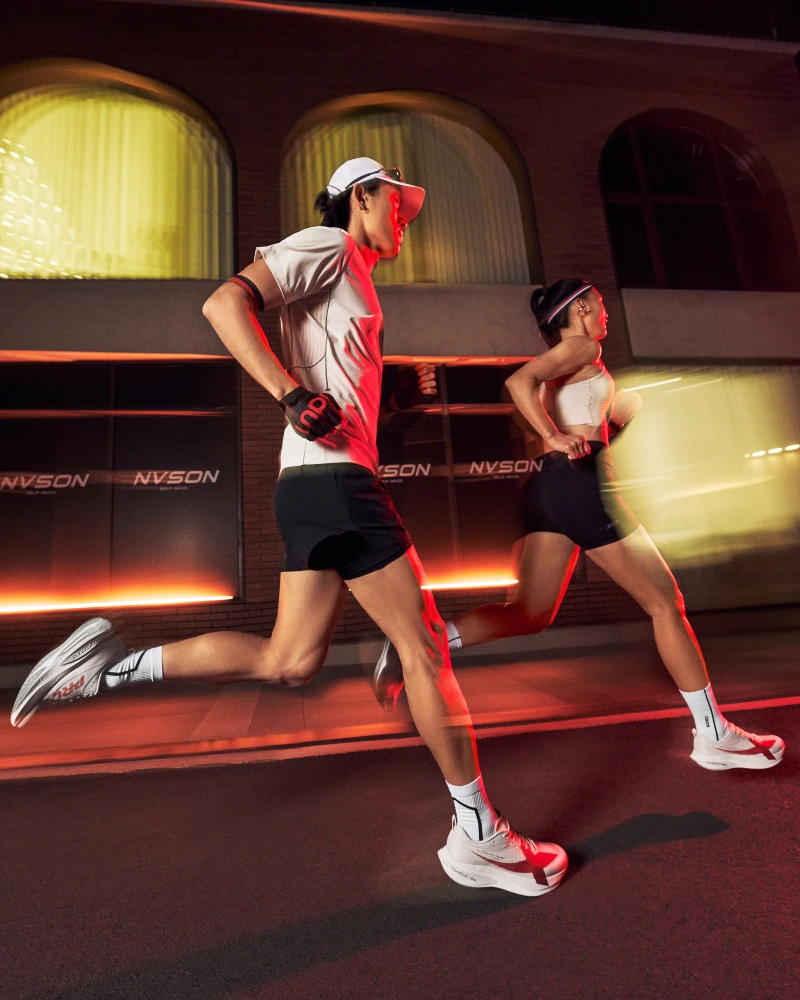
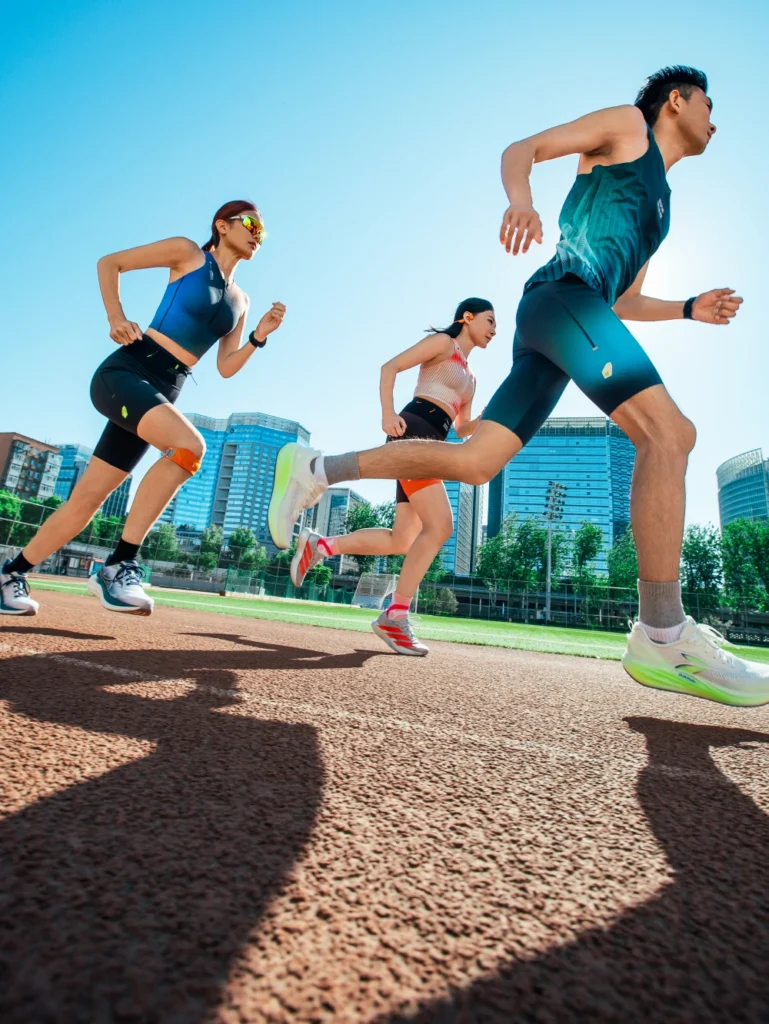
Gone are the days of Western dominance on China’s running tracks and gym floors. A powerhouse lineup of domestic brands now leads the charge, aggressively capturing market share by engineering elite performance gear tailored specifically to local athletic profiles and high-density urban environments.
Anta has masterfully evolved from a traditional national manufacturer into a fierce global competitor. Backed by massive Olympic visibility, along with research and development investments, its performance lines for running and training cater to an increasingly health-conscious public that demands professional-grade equipment. Li-Ning has similarly captured the cultural zeitgeist, celebrated for its bold “China chic” aesthetic while commanding the serious running community with its elite Feidian line of running shoes, which has become a staple at major marathons.
The true mechanical disruptor, however, is Xtep. The brand initially came to prominence by anchoring China’s long-distance running boom, engineering the carbon-plated footwear that helped both He Jie and Yang Shaohui break the Chinese national record at the 2023 Wuxi Marathon, a time that had stood for 15 years.
The 2025 release of Xtep’s 160X 7.0 Pro running shoe showcased a substantial evolution in raw performance engineering, featuring a highly responsive ACE+ foam midsole paired with a GT700 carbon plate to deliver significant propulsion while dampening joint fatigue and addressing the chronic overuse injuries that frequently sideline high-mileage runners.
FITNESS ECOSYSTEMS & TRAINING CONCEPTS
The physical spaces where Chinese consumers sweat are undergoing a parallel, highly digitised evolution. The antiquated model of the status-oriented big-box gym membership is being swiftly replaced by flexible, community-centric formats. This shift mirrors a broader cultural trend that values authentic human relationships and transparent access over rigid institutional status.
At the forefront of this movement are tech-enabled, pay-per-use fitness chains like LeFit and Super Monkey. Founded on the principle of removing predatory annual contracts and pushy salespeople, Super Monkey allows users to book high-energy, boutique group classes directly via its mobile app or mini programme. This flexible model prioritises certified coaching and collective motivation, emphasising the social rituals that permeate wellness culture, particularly at gyms.
This democratisation of fitness has given rise to independent personal training studios that put data tracking at the heart of their business models, a transformation anchored by the country’s largest online fitness ecosystem, Keep. Integrating live-streamed workouts, algorithmic coaching and robust social tracking into a single app, Keep has made wellness hyper-accessible.
Founder Wang Ning highlighted this democratisation when discussing the intrinsic limitations of traditional fitness options, pointing out that conventional gym memberships are fundamentally flawed for modern workers because they are inherently “expensive and take a long time to get to”. By targeting white-collar workers with limited time and developing space-saving interactive hardware, such as smart stationary bikes optimised for compact apartments, Keep ensures that a data-driven community workout is accessible directly from one’s own living room.
‘The antiquated model of the status-oriented big-box gym membership is being swiftly replaced by flexible, community-centric formats. This shift mirrors a broader cultural trend that values authentic human relationships and transparent access over rigid institutional status’
WEARABLES & DIGITAL HEALTH
Fuelling this data-first fitness culture is the rapid expansion of China’s wearable digital health market. Where traditional wellness devices laud passive stepcounting, domestic tech giants are offering consumer devices that boast advanced, preventative medical diagnostics — often for half the price of their Western predecessors.
Huawei Health currently leads the premium market share, utilising its impressive clinical research infrastructure to turn everyday smart watches into active medical resources. Its flagship Huawei Watch D2 acts as a quasi-laboratory for the wrist, incorporating a mechanical airbag into the strap to provide accurate ambulatory blood pressure monitoring. Coupled with the device’s immediate, on-the-go electrocardiogram readings, the watch demonstrates how smart wearables have transformed from fun, interest-driven data collectors into legitimately life-saving tools.
On the competitive side, mass-market favourites like the Xiaomi Mi Band activity tracker lines continue to dominate by offering affordable, feature-rich tracking (steps, heart rate, sleep data) to mainstream populations.
Meanwhile, the increasing popularity of brands like Amazfit perhaps heralds expanded consumer expectations, suggesting a move towards blending strong health tracking with a sleek aesthetic, where health data and style are equally in demand.