



















For centuries, humans have searched for ways to stay young. Earlier attempts leaned on creams, tonics or mythical fountains of youth; today, scientists are looking somewhere far smaller: inside our cells.
One of the most intriguing questions in longevity research is whether ageing might, at least partly, be reversible. Not something as extreme as turning an 80-year-old into a 20-year-old, but whether old cells can be persuaded to behave more like younger ones, repairing damage more effectively and helping us stay healthier for longer.
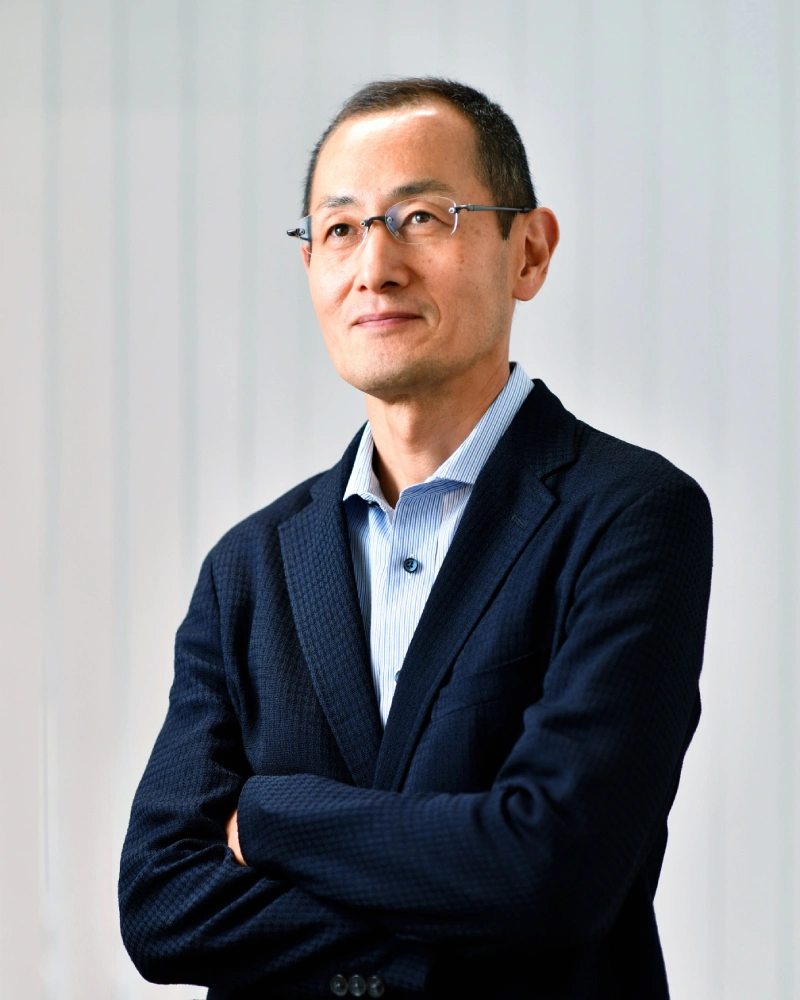
At the centre of this idea is cellular reprogramming, pioneered by Japanese scientist Shinya Yamanaka. In 2006, Yamanaka showed that mature adult cells could be returned to a much earlier, stem-cell-like state. Until then, scientists largely believed that once a cell had become a skin cell, heart cell or another specialised type of cell, its identity was fixed. Yamanaka showed that, under the right conditions, identity could be reset.
Four genes: Oct4, Sox2, Klf4 and c-Myc, now known as the Yamanaka factors, could essentially reset that identity, a discovery that later earned him the Nobel Prize in Physiology or Medicine.
The initial excitement focused on regenerative medicine: reset an adult cell, guide it into becoming another type, and you might one day replace damaged cells in diseases such as Parkinson’s or heart failure. But the discovery also raised a more provocative question: what if scientists didn’t reset a cell completely, but turned back the clock only a little?
MAKING CELLS A LITTLE BIT YOUNGER
That idea is known as partial cellular reprogramming. Complete reprogramming takes a cell almost all the way back to a blank slate; partial reprogramming stops earlier, restoring youthful traits while letting the cell remember what it’s supposed to be. A skin cell should remain a skin cell, just a younger version of itself.
Spanish scientist Juan Carlos Izpisua Belmonte helped provide some of the first striking evidence that this was possible. While he was at the Salk Institute, his team activated the Yamanaka factors in short pulses instead of leaving them permanently switched on.
“Our study shows that ageing may not have to proceed in one single direction,” Izpisua Belmonte states in a 2016 Salk Institute article. “It has plasticity and, with careful modulation, ageing might be reversed.”
In mice with a disease that causes premature ageing, the approach improved organ function and extended lifespan by roughly 30 percent; in normally aged mice, it helped muscle and pancreatic tissue recover faster after injury.
The goal wasn’t to make cells young in every sense, but to restore enough of their earlier function to matter.
“We are creating methods to essentially make cells a little bit younger,” Izpisua Belmonte says in a 2022 Gladstone Institutes article. “Younger cells are able to cope much better with mutations or other stress challenges.” That phrase, “a little bit younger”, captures both the ambition and the limits of the field.
WHEN CELLS FORGET WHO THEY ARE
Izpisua Belmonte believes our bodies deteriorate partly because cells become less effective at maintaining their identity.
“Disease and ageing have to do with cell identity,” he told Time magazine in August 2026. “With the passing of time, cells start to lose the identity they maintained so well in the first years of life.”
In 2025, Izpisua Belmonte reported that older mice treated with Yamanaka factors showed rejuvenation in the kidneys, liver and intestines, and that their skin cells healed wounds better.
There’s a balancing act, though: cells need to become younger without becoming so flexible they forget what they are. In rejuvenation research, younger is not enough; a cell must also stay stable and safe.
MEASURING A MOVING TARGET
How do we know whether a cell, or a person, has become biologically younger? Chronological age is easy to calculate; biological age is not. Two 60-year olds can age at very different rates, which is why scientists have long searched for ways to measure ageing directly rather than by counting birthdays.
The best-known tool is the epigenetic clock, developed by UCLA geneticist Steve Horvath in 2013. It tracks DNA methylation, chemical tags on our DNA that change in surprisingly predictable ways as we age.
‘Our study shows that ageing may not have to proceed in one single direction. It has plasticity and, with careful modulation, ageing might be reversed’
– Juan Carlos Izpisua Belmonte
In 2016, Horvath led an international consortium of 25 institutions in a study that analysed blood from more than 13,000 people in the United States and Europe. People whose biological age appeared older than their actual age had a higher risk of dying sooner.
“We discovered that five percent of the population ages at a faster biological rate, resulting in a shorter life expectancy,” Horvath says. Douglas Kiel, a Harvard Medical School co-author of the paper, adds: “This study validates the use of DNA methylation as a biomarker for biological age.”
Still, smoking, diabetes and high blood pressure remained stronger predictors of death than the epigeneticage score. The clock is meaningful, but it isn’t a crystal ball.
If ageing changes chemical markers on our DNA, and reprogramming changes those markers again, scientists can ask whether a treatment has made a cell’s biological age appear younger. That sounds remarkably close to reversing ageing, but there’s a catch: nobody yet knows whether these molecular changes cause ageing or are simply signs that ageing is taking place.
If a treatment lowers someone’s epigenetic age from 60 to 50, that’s extraordinary, but researchers still need to know what those 10 years mean. Is the person healthier? Will they live longer? Changing the number on the clock isn’t the same as changing the future.
“The epigenetic clock would allow scientists to quickly evaluate anti-ageing therapies in only three years,” Horvath says.
‘We are creating methods to essentially make cells a little bit younger. Younger cells are able to cope much better with mutations or other stress challenges’
– Juan Carlos Izpisua Belmonte
FROM MICE TO PEOPLE
Much of the most exciting rejuvenation research has so far been confined to cells and animals, but that is beginning to change. In March 2026, Japan granted conditional approval to two treatments based on Yamanaka’s iPS-cell technology, for Parkinson’s disease and heart failure: a once-unimaginable technique becoming part of real medicine.
Researchers are also testing approaches aimed more directly at rejuvenation. In the US, a patient was treated in 2026 with an experimental therapy using three Yamanaka factors, targeting ageing retinal cells linked to glaucoma and optic neuropathy.
Previous animal studies also suggest that reprogrammed older kidneys can function more like younger ones. Still, one of Izpisua Belmonte’s own warnings may be the most useful way to read all of this: “a mouse is not a human.” A spectacular animal result is the beginning of a scientific story, not the end.
THE RISKS OF BECOMING YOUNGER
There’s another obstacle scientists can’t ignore: cancer. The same flexibility that lets a mature cell become younger can turn dangerous if the process isn’t tightly controlled. One of the original Yamanaka factors, c-MYC, is itself associated with tumour growth.
Researchers have searched for safer approaches that avoid permanently altering a cell’s genome. The broader risk is just as simple: push a cell backwards too far, and it can lose the identity that makes it useful. The challenge is precise: make an old cell younger, but not too young.
WHAT WOULD STAYING YOUNG REALLY MEAN?
Twenty years after Yamanaka’s discovery, scientists have shown something extraordinary: ageing cells aren’t necessarily trapped in one permanent state. In animals, older tissues have regained abilities lost with age, and technologies born from cellular reprogramming are beginning to reach human medicine.
But that isn’t the same as proving scientists can reverse human ageing. A lower biological-age score doesn’t guarantee a longer life.
Yamanaka places the emphasis somewhere more meaningful than immortality. “Our first priority is to extend healthy longevity, not just longevity itself,” he told Time in 2026, “so that people can live through their 80s and 90s without the need of aid from other people.”
Perhaps that’s the real promise of this science: not living forever, but keeping our cells, tissues and organs working well for more of the years we already have.
For now, cellular reprogramming offers no shortcut around ageing itself. What it offers is a legitimate, increasingly well-funded scientific question: if we can teach old cells to behave more like young ones, how far can that idea eventually take us?