























Yesterday, my friend texted. She’d been packing her girls up for college and it had been a long and difficult day.
One of her daughters had graduated from high school last year but deferred her university place, giving them a precious extra year together. The second had tossed her grad cap into the air just weeks before and was fired up to leave. The result was a double blow. Two gone, at once.
“How do I get on the plane home alone?” she texted.
My heart leapt.
I wanted to know too. My daughter has six weeks until she joins legions of other new high school graduates for their first year at university. For them, it’s a time of excitement and anticipation of a new and independent life away. For the parents left behind, it can be a tough transition.
But here’s what surprised me when I started asking around. The dread might actually be the hardest part.
“Sometimes it’s worse in the build-up than the actual,” says Doreen Jowharsha, a mental health counsellor with the charity St. John’s Cathedral Counselling Service and mum of two, whose eldest son recently completed his first year at university in the UK. The drop-off, the goodbye, the drive home alone, these are the moments parents brace
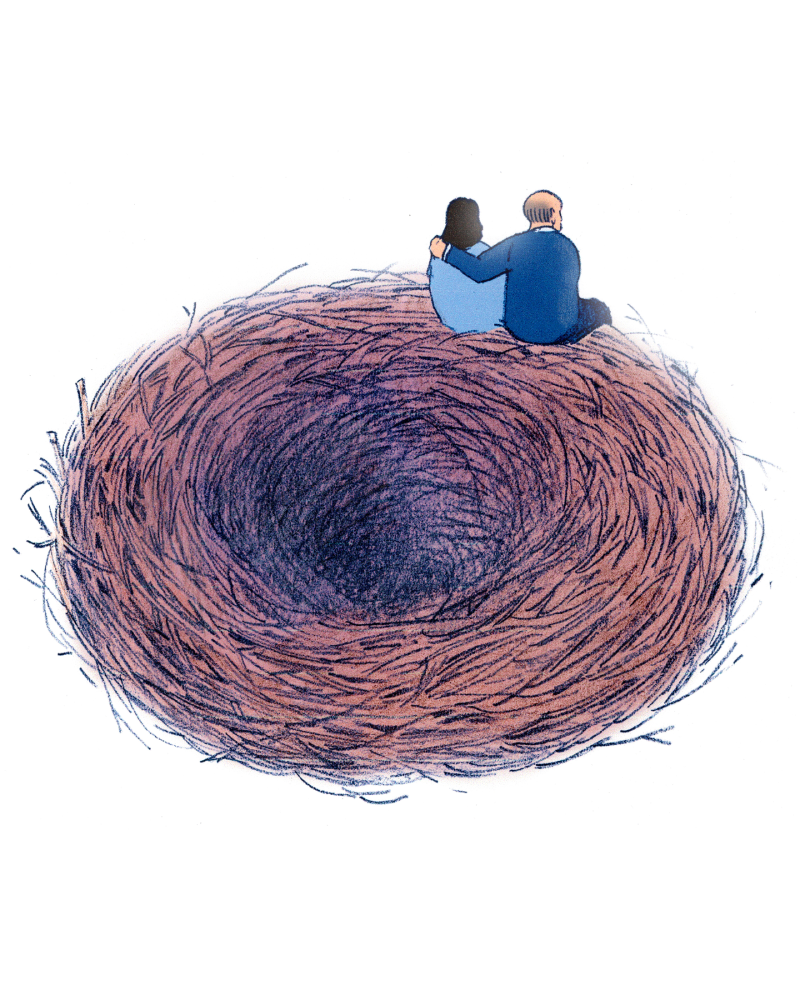
for most. “The thought of becoming an empty nester is really hard.”
Her own experience bore this out. The first term also brought low-level concern — was he eating? Making it to lectures? — but a bigger surprise arrived. They started talking more. Every two or three days. More, far more, she says, than they ever had at home. “He has more to share, so there seems to be a lot more to talk about.”
Before that though, come tough feelings.
For many parents, the empty nesting phase is more than simply a transition. It’s grief. Angie Bucu, a mindfulness practitioner who works with people through life’s big shifts, is unequivocal. “The grief that there aren’t these beings around you that you’re used to,” she says, “and sometimes there’s that real realisation: oh, I’m getting older. Many of us find that really hard to accept.”
The temptation is to push past the feeling. Get busy, start something new, pull your socks up. Bucu cautions against it. “If we don’t feel these negative emotions, they just keep bouncing back in different ways.” Unacknowledged grief, she says, can surface as anxiety, overprotectiveness or tension in the very relationship you’re trying to protect.

‘The grief that there aren’t these beings around you that you’re used to, and sometimes there’s that real realisation: oh, I’m getting older. Many of us find that really hard to accept’ – Angie Bucu

The alternative is harder in the short term and more effective in the long run: feel the feelings. “Self-compassion is just acknowledging that I feel rubbish. And that’s okay,” she says. “Then recognising: I’m not the only parent feeling this,” which can be helpful. From that place, any selfcare, whether a walk, a cry or a call to a friend, can work.
Jowharsha’s own solution was refreshingly simple: tell them. When her son went quiet for a few days and she started to spiral, she called a girlfriend who’d been through it. “She said: just tell him you’re worried if he doesn’t reply,” she recalls.
Letting your children in on what you’re actually thinking matters more than we realise. “Straightforward, really,” says Jowharsha.
And when her son — whom she’d worried might struggle to manage — arrived in Leeds and independently went to Ikea, opened a bank account, sorted his own laundry, she was floored. “If you give them room,” she says, “there’s room for surprise.”
Maybe that’s what empty nesting really is: not an ending, but a mutual becoming. Theirs into independence. Ours, given time and a little self-compassion, back into ourselves
WELLNESS TIPS
Three Ways to Help Ease Empty Nesting Symptoms
Try RAIN
Try a simple mindfulness process: Recognise what you’re feeling. Accept it, Investigate where you feel it in your body, then Nurture yourself. That might mean a quiet moment, or taking action. Both work.
Three Good Things
Before sleep, write down three good things from your day. They can be tiny, but helpful to counter the brain’s natural negativity bias, settling the busy mind that keeps you awake at 2am.
Replace Worry with Warmth
Each day, bring to mind something good about your child. A quality you love, a memory, something they mentioned about their new life. This practice keeps appreciation for your connection, and steers the brain away from worry and towards warmth.