
























Dakota Johnson swears her beauty secret is 14 hours of sleep — aspirational, but wildly unrealistic if you have a job, a social life or both. You want better sleep, not monastic evenings. Enter sleepmaxxing.
Sleep is the quiet engine of good health: get enough of it and everything else upgrades in the background: clearer skin, steadier moods, sharper decisions. Yet truly restorative rest is rarely as simple as mouth taping or popping melatonin like breath mints. Night owls know this better than anyone. You can’t force yourself to become a morning person, but you can design smarter habits that work with your life.

1. Eat kiwis before bed
If late dinners are non‑negotiable, this is one of the gentlest sleepmaxxing habits to layer in. Eating one to two kiwis about an hour before bed has been associated with falling asleep faster and staying asleep longer. The effect is thought to be linked to kiwifruit’s mix of antioxidants and serotonin, which support the body’s sleep‑wake regulation.In a four‑week study, participants who ate two kiwis before bed saw meaningful improvements in total sleep time and sleep efficiency. While not a miracle cure, it’s a low‑lift ritual that can quietly nudge your nights in the right direction.
2. Make magnesium work for you
Sleepmaxxing loves magnesium, and in this study there is emerging science to pay attention to. Recent randomised trials and meta‑analyses suggest magnesium supplementation can improve subjective sleep quality and shorten the time it takes to fall asleep. Magnesium glycinate, typically in the 200–400 mg range taken 30–60 minutes before bed, appears to be particularly effective. Think of it less as a sedative and more as a nervous‑system support: if your evenings end with late dinners, a workout or travel, this habit that can help your body down‑shift without demanding early lights‑out.
3. Keep your bedroom cool
As your core temperature drops at night, your body receives one of its most reliable signals that it’s time to sleep. Too much ambient heat makes it harder to achieve that cooling curve, which is why stuffy rooms tend to produce restless tossing, turning and those 3am wide‑awake moments. Sleep researchers generally recommend keeping the bedroom in a cool‑but‑comfortable band, roughly 15°C to 19°C. The goal is a space that supports your natural sleep biology rather than fights it. A small adjustment to your thermostat, bedding or fan set‑up can be surprisingly powerful.
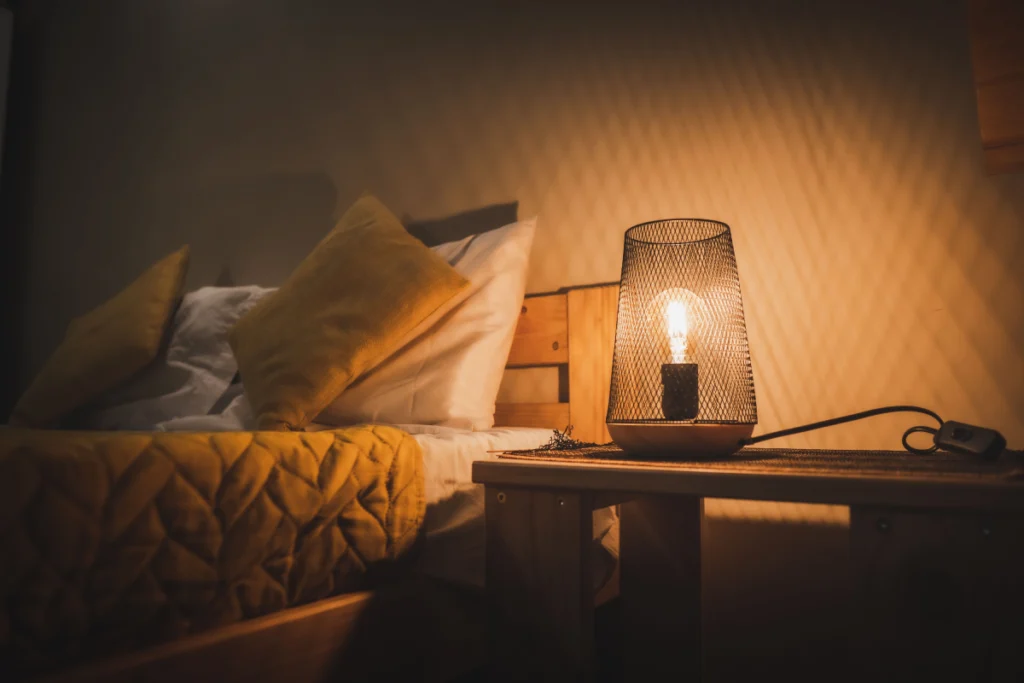
4. Edit your blue‑light habits
Doom‑scrolling at midnight is the obvious villain: blue light signals daytime to your brain, delaying melatonin release and making it harder to feel drowsy. But often, the bigger disruptor isn’t just the wavelength, it’s the stimulation. Late‑night emails, heated comment threads and ‘just one more” episode keep your mind humming long after you’ve technically gone to bed.The fix isn’t to ban screens altogether, but to be more intentional. Dim your brightness, switch on night mode, and steer away from high‑engagement content the hour before sleep. A familiar comfort show, digital book or low‑stakes browsing is typically fine.

5. Sip with a little more strategy
You don’t need to abandon dinner with friends or retire the occasional espresso martini to protect your sleep, but timing and quantity matter. Caffeine can interfere with your circadian rhythm and linger for hours, so most sleep experts recommend cutting it at least six hours before bed. That afternoon double shot may feel essential; it can also be the reason your mind is still spinning at midnight.
Alcohol, meanwhile, is the classic frenemy: it can make you feel drowsy quickly, but is consistently linked with fragmented, lower‑quality sleep and more frequent awakenings later in the night. A more sleep‑aware approach is to keep intake moderate, alternate with water and avoid turning nightcaps into a nightly habit. Enjoy the espresso martini — just don’t expect it to play nicely with deep, uninterrupted rest.
Sleepmaxxing is about finding habits that respect your lifestyle instead of trying to overhaul it overnight. Layer in the rituals that feel realistic — a kiwi after dinner, a magnesium supplement, a cooler bedroom, a smarter scroll and a more strategic nightcap — and let them compound quietly. The goal isn’t a rigid routine, rather waking up feeling as though you truly slept.