















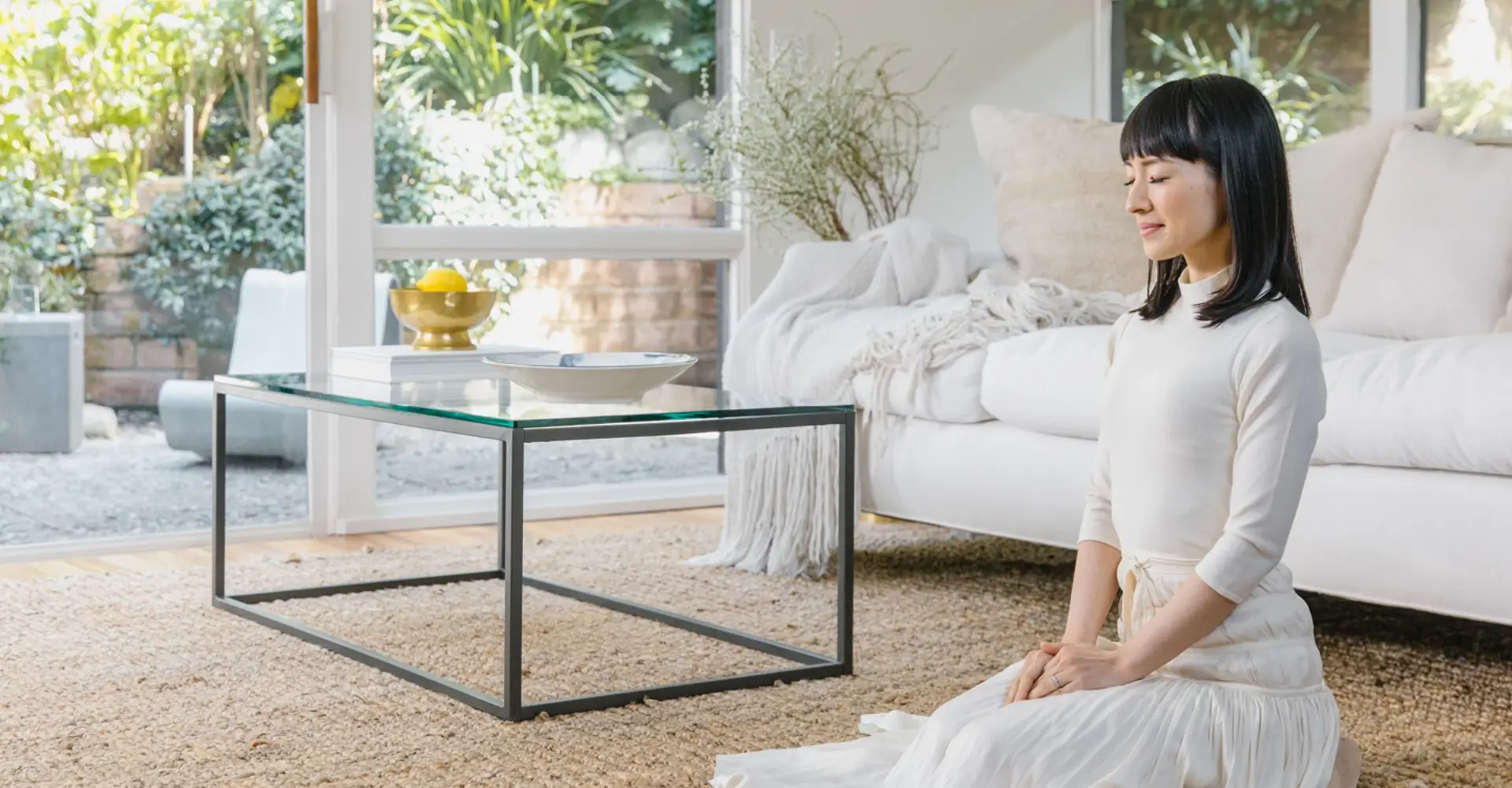

For me, tidying is not about achieving a perfect state. It is about creating a space that supports you, and a life that feels right for you
How has your idea of joy changed over the years — especially when it comes to wellness and inner peace?
For me, the essence of joy hasn’t really changed. It has always been about what truly makes me feel happy and aligned. What has evolved, however, is what I find joy in.
In the past, I felt a strong sense of joy and purpose in my work — helping as many people as possible experience the KonMari Method and discover a life that sparks joy. That is still very important to me. But after becoming a mother, my perspective has shifted. I’ve come to treasure time with my family more deeply, and I now find joy more often in quiet, everyday moments.
These days, there’s a lot of pressure to have every part of life perfectly organised. Do you think that can start to
feel overwhelming?
I believe the desire to do things perfectly is something very sincere and meaningful. It often comes from a genuine intention — to care deeply about what we do and to grow into a better version of ourselves.
However, when the desire for perfection becomes too strong, it can begin to turn into pressure. Sometimes, perfection itself becomes the goal, and we lose sight of what truly matters beyond it.
We are human, and it is natural that things don’t always go as planned. When we expect everything to be perfect, even small imperfections can feel like failure, and that can create stress. For me, tidying is not about achieving a perfect state. It is about creating a space that supports you, and a life that feels right for you. So, rather than aiming for perfection, I encourage people to focus on what truly sparks joy.
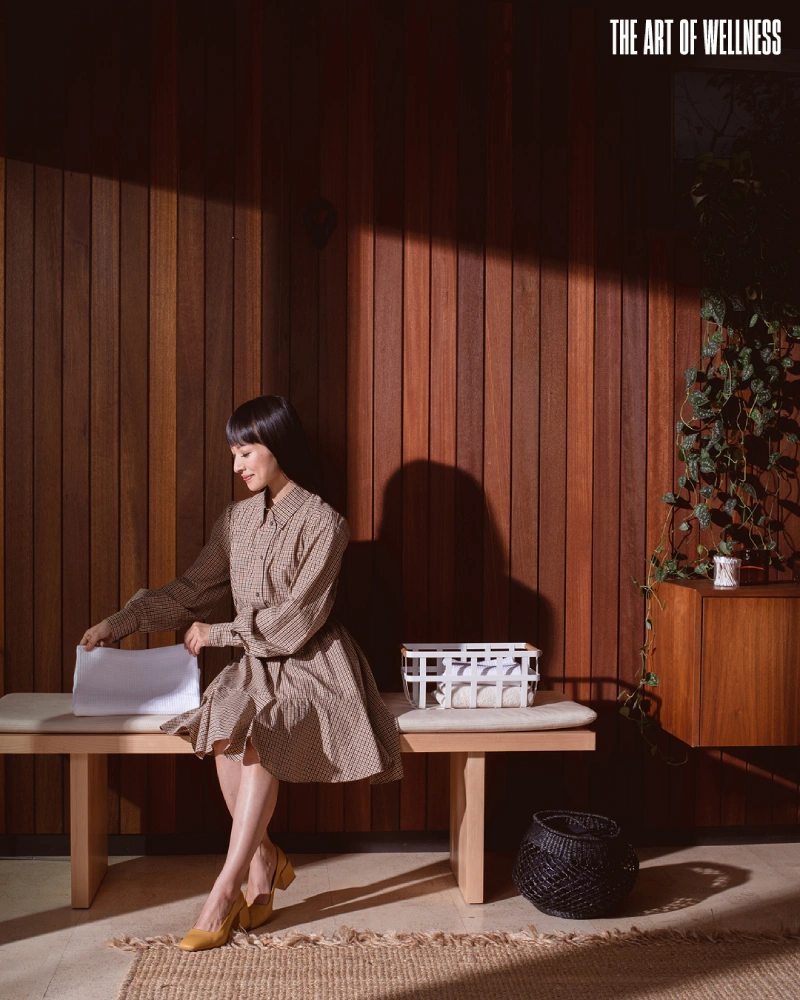
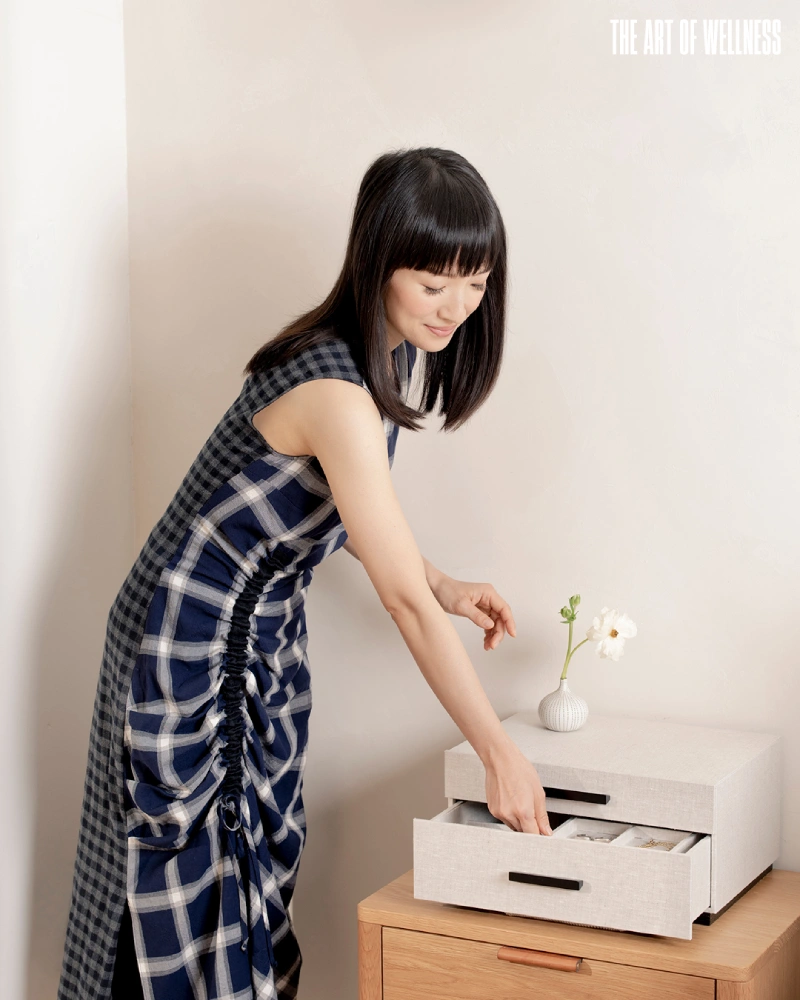
What does it mean to you to embrace imperfection — and how can that shift how we live day to day?
The joy of being imperfect is a reminder that we are human — and that we are not meant to do everything alone. It allows us to feel connected, both to ourselves and to others. In my own life, I have been supported by so many people — my husband, my family, my friends and my team. Whether I was writing my books, building my business or simply living my daily life, I have never done it alone.
How do you personally balance wanting to grow with simply accepting where you are right now?
When it comes to balancing self-improvement and self-acceptance, I believe what matters most is accepting and loving yourself as you are now. For example, even if I’m not able to tidy my home perfectly in the way I ideally would, I believe it’s important to maintain that sense of aspiration — the inner desire to move toward that ideal. At the same time, I try to embrace my current reality as it is. Even when life becomes so busy that I can’t keep my home perfectly tidy, I remind myself to approach that situation with compassion and to cherish my life.
The key is not whether everything is in perfect order, but whether you are caring for what truly matters most in your life. In my case, as I am raising children, what matters most is spending time communicating with them and maintaining a healthy balance so that I can show up as my best self. So even if tidying takes a lower priority for a time, I still feel that I am living a life that sparks joy — and that awareness is what truly matters. I believe this perspective naturally connects to the ideas of balance and self-compassion in parenting.
You’ve built a whole movement around tidying — but what role do rest and softness play in your own life now?
Rest and emotional ease have become an essential part of my daily life. Especially after becoming a mother, I’ve learned that it’s not always necessary to keep everything perfectly in order. There are moments when my home is a little untidy, but instead of fixing it right away, I choose to sit down and read with my children — or simply rest when I feel tired. I’ve also made it a habit to take a short tea break for myself each day, even if it’s just for a few minutes. These small choices help me stay balanced. Rather than trying to always maintain a perfect space, I focus on creating a life where I can move naturally between activity and rest in a way that feels sustainable.
What has letting go of control taught you about making space — for yourself and for others?
Letting go of control means trusting that not everything needs to be perfectly managed all the time. In the past, I often felt that I needed to keep everything in order. But over time, I’ve learned that when I try to control too much, my life can start to feel tight and restricted. When I let go, even just a little, it creates space — both in my schedule and in my mind. And within that space, new ideas can arise more naturally, and I can be more present with the people around me.
Do you think there’s a difference between a life that looks perfectly managed and one that actually feels meaningful?
A perfectly managed life is one where everything goes according to plan. It feels predictable, controlled and within expectations. A meaningful life, on the other hand, often includes the unexpected — detours, unplanned moments, and even experiences that may seem unnecessary at first. In my own life, I never imagined that I would be sharing my message with people around the world.
But by following the natural flow of opportunities, I’ve been able to connect with people across different cultures and see my work grow in ways I could never have planned. I believe those unexpected moments are what give life its depth. They allow us to discover something new, connect us with others, and grow in ways we could not have predicted. So, in that sense, I feel that the life we are living — full of imperfections and surprises — is already a meaningful one.
If someone is struggling with imperfection, is there one simple practice you’d suggest starting with?
If I were to suggest one practice, it would be tidying. When we tidy, we naturally come face to face with our past choices — things we bought but didn’t use, or items we once loved but no longer need. At first, this can feel uncomfortable, as it reminds us that we are not perfect. But through that process, I believe we begin to accept those choices as part of ourselves. Instead of judging, we can start to say, “That was the right choice for me at that time.”
What does a joyful, sustainable home really look like for you day-to-day?
A joyful and sustainable home is not about being always perfectly organised. It is a home where everyone in the family takes part in caring for it and maintaining a comfortable state. In our daily life, each member of our family takes care of our own belongings.
In our home, our children have developed the habit of folding their clothes in the laundry room before bath time and putting them back in their own closets. It is also important to understand how things flow within a home — how waste is created and how it is managed. When everyone becomes aware of these small processes, the home becomes something we care for together, rather than something managed by one person.

What drew you to the Breathe in Japan project — and what kind of feeling did you hope people would take away from it?
I was drawn to this project because it takes place in places such as Izumo and Mie — areas that feel like the origins of Japanese culture and spirituality. I felt that these are places where something essential to Japan still exists — not as an idea, but as something you can experience. The quiet beauty of the landscape, the clear atmosphere of shrines, and the sense of presence that can only be felt when you are there.
How has living in Japan shaped the way you think about wellbeing in everyday life?
In Japan, many small actions — like preparing a cup of tea, appreciating the changing seasons, or expressing gratitude for food — are naturally woven into everyday life. Through such experiences, I am reminded that wellbeing is not about doing something special, but about how we approach these ordinary moments. It is about how much presence and appreciation we bring to what we are already doing. When we live with that awareness, even simple routines can become a source of balance and fulfilment.
I also find joy and a sense of pause in many places across Japan. In spring, I love spending time among the cherry blossoms and observing their beauty. Shrines also fill me with calm, and I enjoy unwinding in hot springs, where both body and mind can soften. Though I appreciate the energy of cities, I’m most drawn to places where nature is present.
How do ideas like seasonality and everyday rituals influence how you move through your day?
Japan’s sense of order, seasonality and quiet appreciation has deeply influenced the way I think about daily life. Simple actions — like tidying the home, doing the laundry or cleaning the floor — are not just tasks to complete, but opportunities to reset the mind and reconnect with a sense of gratitude.
Through these daily practices, I’ve come to see that caring for the home is also a way of caring for myself. It helps me slow down, become more present, and appreciate what I have. seasonality is another important element. By noticing the changes in nature, I’m reminded that each moment is unique and cannot be repeated. Instead of rushing through daily life, I’ve learned to find meaning in ordinary moments and to approach them with greater intention.
What does kurashi mean to you in your own life?
Kurashi is a Japanese word meaning way of life — in particular, it refers to how we spend our time or what we do in our daily lives. Although I make tidying my life’s work, tidying itself is not a goal. It is a means to achieve an ideal kurashi. When we think about tidying, we tend to focus on the physical aspects — such as storage or the state of our home. But what really matters is to realise your ideal kurashi through tidying up. In other words, to live in a way in which you can spend your time on what really sparks joy for you.
What can we learn from Japanese culture about finding joy in small, repeated moments?
Japanese culture teaches us that joy can be found in small, repeated acts. Simple routines — like preparing tea, tidying the home or caring for everyday objects — become moments we return to repeatedly. This way of living closely aligns with my own approach to wellness. Rather than seeking something special, I focus on how I engage with what I already do each day. For me, folding clothes, lighting incense in the morning, or cleaning the floor are all important wellness practices. When I bring attention and a sense of gratitude to these small actions, they begin to feel more meaningful. Over time, these moments naturally support a sense of balance and wellbeing.
Why do you think so many people put off decluttering, even when they want to do it?
One reason, I believe, is that people tend to think of tidying as just another task. When we focus only on the task itself, it’s natural for it to start feeling heavy or burdensome. Tidying is not the goal — it is a means to achieve your ideal lifestyle.
That’s why it’s important, from the beginning, to think deeply about what you want to gain through tidying: what kind of life you want to live, and who you want to become. Clarifying this helps you move past procrastination and stay motivated.
What does wellness mean to you?
Wellness is not something achieved through big changes, but something cultivated through small, everyday choices. It is found in how we live each day — in the way we care for our home, how we treat our belongings, and how we take moments to pause and reconnect with ourselves.