


















There was a moment on the road south of Fairbanks when the landscape opened so completely that it felt as though the sky had slipped down and met the earth.
The traffic thinned, the horizon stretched and the steady hum of tyres became the only sound in the car. I remember glancing at the dashboard and realising I hadn’t reached for my phone, adjusted the radio, or checked the time in nearly an hour. My thoughts weren’t racing ahead of or circling behind me. They were simply moving forward, mile by mile, as if keeping pace with the road itself.
Alaska has a way of recalibrating your senses. Distances feel longer, silence feels deeper and the mind, relieved of constant input, begins to settle. But what I came to understand on that journey is that the mental shift I experienced there wasn’t unique to Alaska. It was the product of something more universal: spaciousness, sustained movement and the quiet rhythm of uninterrupted travel.
The Science Behind Stillness
Psychologists who study environmental psychology often discuss a phenomenon called “attention restoration.” In simple terms, natural settings — especially those with expansive views — give the brain a break from constant decision-making. In busy environments, we’re continually scanning, filtering and reacting. On a long stretch of open road, the mind has less to manage. With fewer small decisions competing for attention, it naturally settles into a gentler, more restorative rhythm.
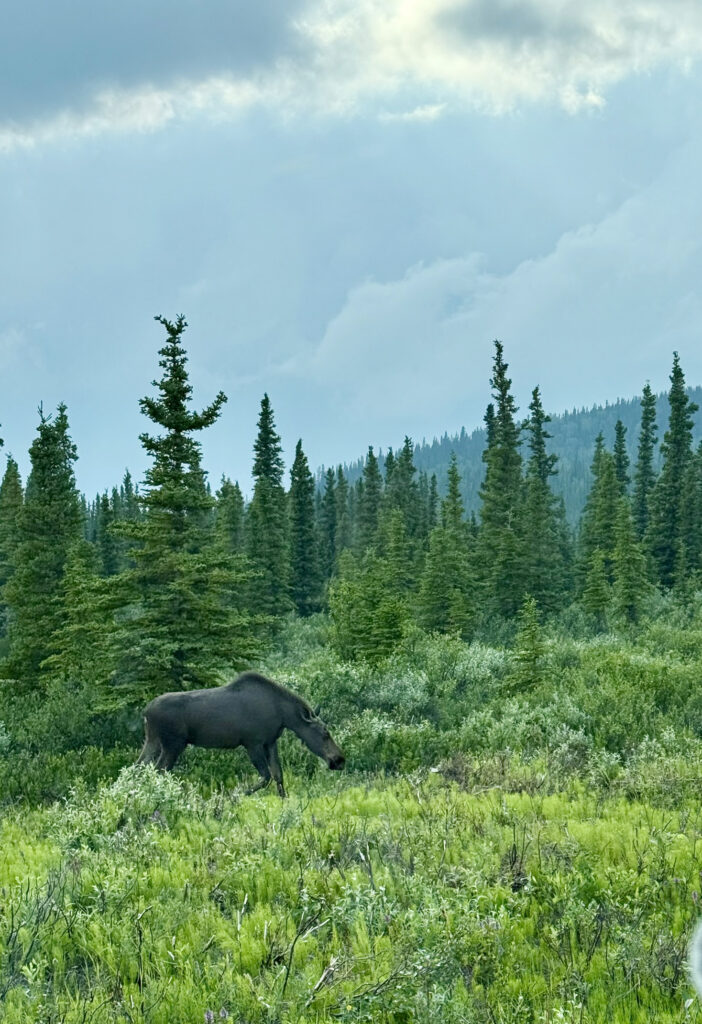
I felt this most acutely driving towards Denali. The road unfurled ahead like a ribbon through spruce forest and tundra, and the mountains appeared and disappeared behind shifting clouds. Occasionally, a moose would materialise near the shoulder of the road — massive, unhurried, entirely uninterested in my schedule. Instead of startling me, these encounters seemed to anchor me, pulling my awareness fully into the present moment.
Movement itself also plays a role. Therapies that use bilateral stimulation, such as eye movement desensitisation and reprocessing (EMDR), which advocates gentle left-right eye movements, help the brain process thoughts and emotions. Long-distance driving, walking, or even watching a landscape pass by naturally may create a rhythm that feels calming, somewhat reminiscent of the bilateral patterns used in therapies like EMDR. It’s a subtle, almost meditative effect.
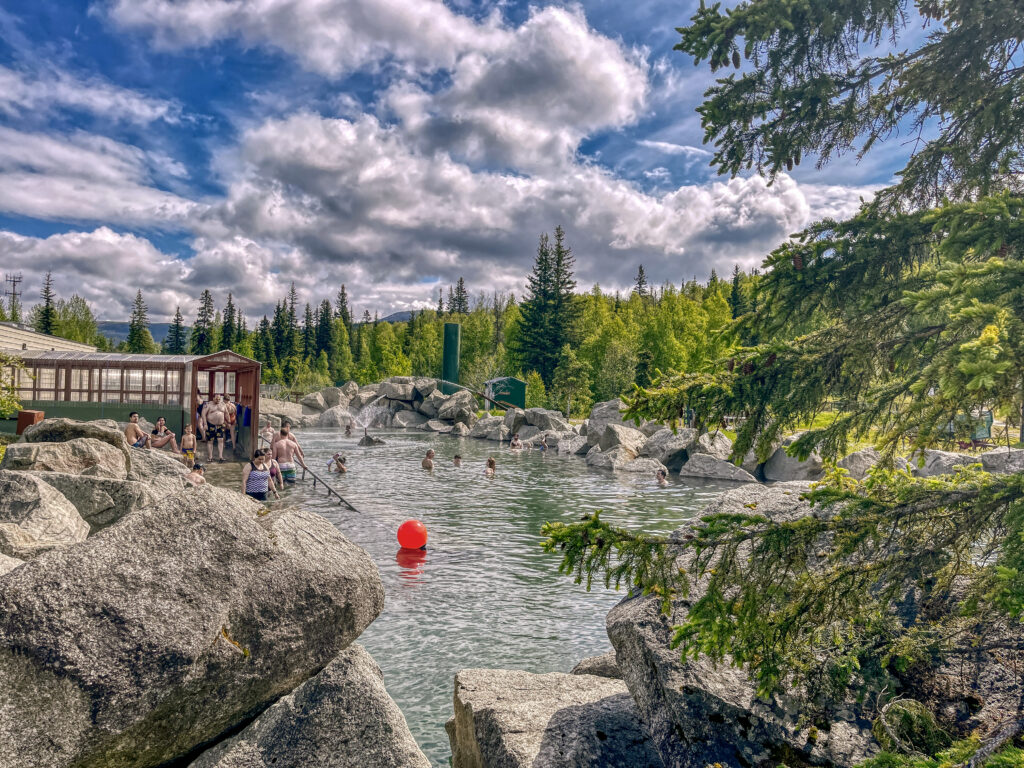
I also noticed it while fly-fishing near Black Rapids, where the river moved steadily past me, and my attention followed the current’s slow arc. Time seemed to loosen its grip, and my thoughts softened in the same way the water softened the edges of the stones beneath it.
How Silence Signals the Nervous System to Relax
There’s another layer to the experience that’s harder to quantify but impossible to ignore: the nervous system’s response to quiet. In crowded or noisy settings, our bodies stay slightly on alert, constantly monitoring for changes. In wide-open spaces, the absence of noise signals safety. The body relaxes before the mind even notices.
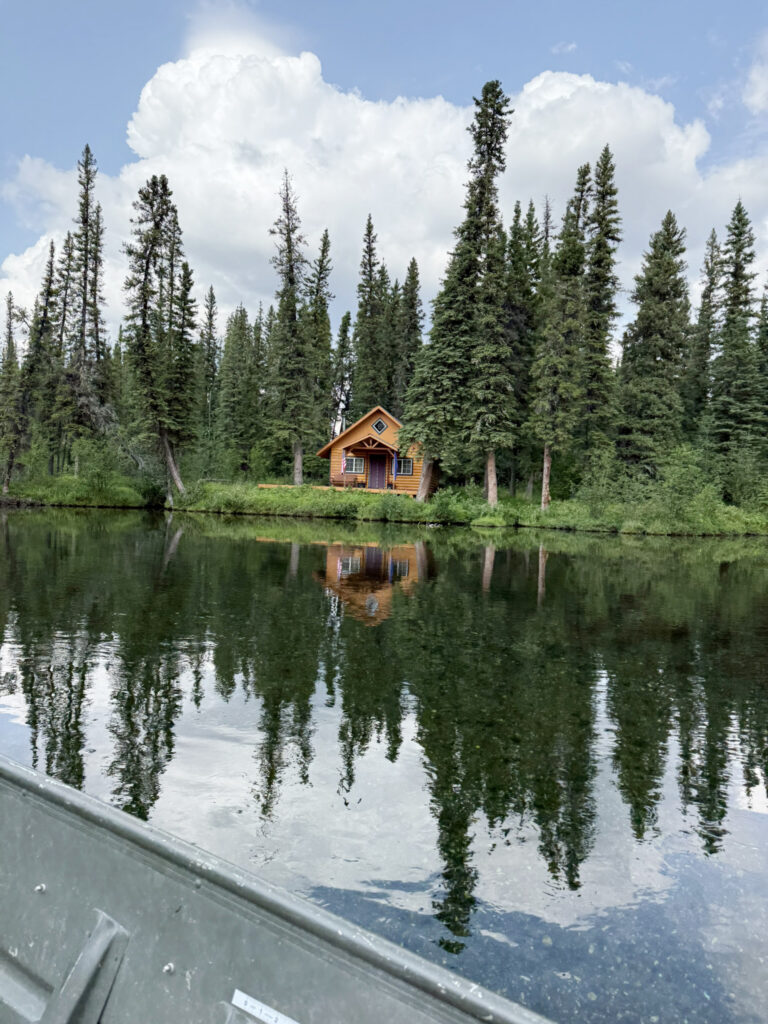
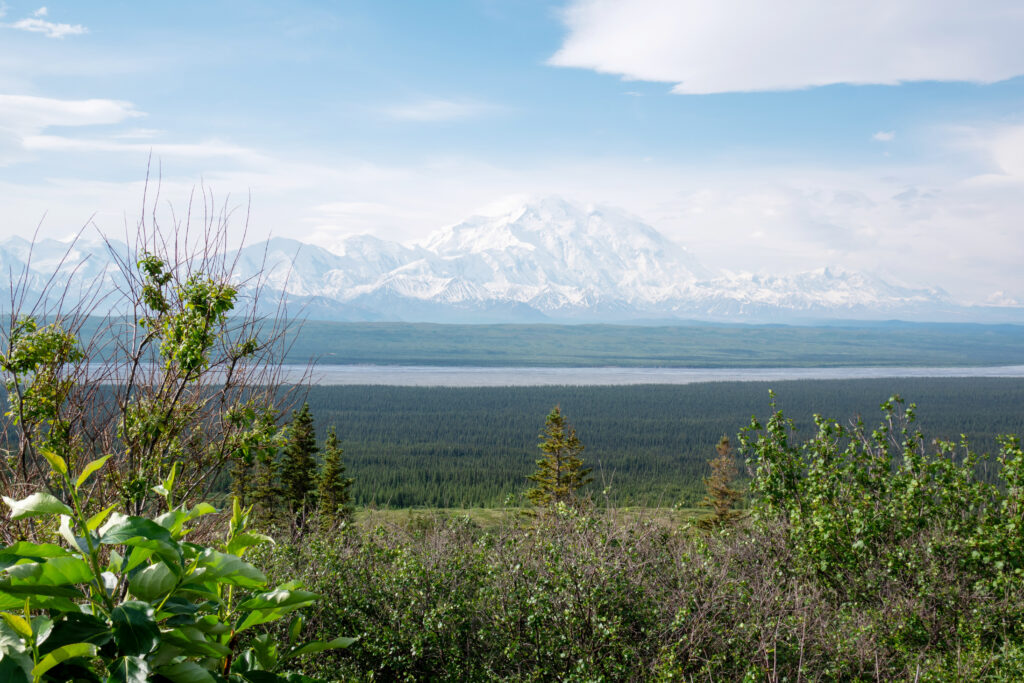
At Camp Denali, my cabin faced an expanse of tundra with the mountain rising in the distance. Early one morning, I stepped outside and was struck by the depth of the silence. It wasn’t empty; it was full of wind brushing through low shrubs, of distant bird calls, and of the faint rustle of unseen movement. Standing there, I felt my shoulders drop, my breath deepen. It was as if somebody had finally given my nervous system permission to exhale.
Déjà Vu Moments — When the Calm Felt Strangely Familiar
What surprised me most was recognising that same mental shift in places far removed from Alaska’s dramatic scale. On a two-week solo road trip through Iowa, I spent hours driving past winter-bare cornfields and long, quiet back roads. The scenery was understated, even simple, yet the effect was remarkably similar. Without traffic or urgency, my thoughts slowed. The looping route — something I’ve always loved — created a sense of forward motion and completion, as though the journey itself had a natural rhythm and resolution.
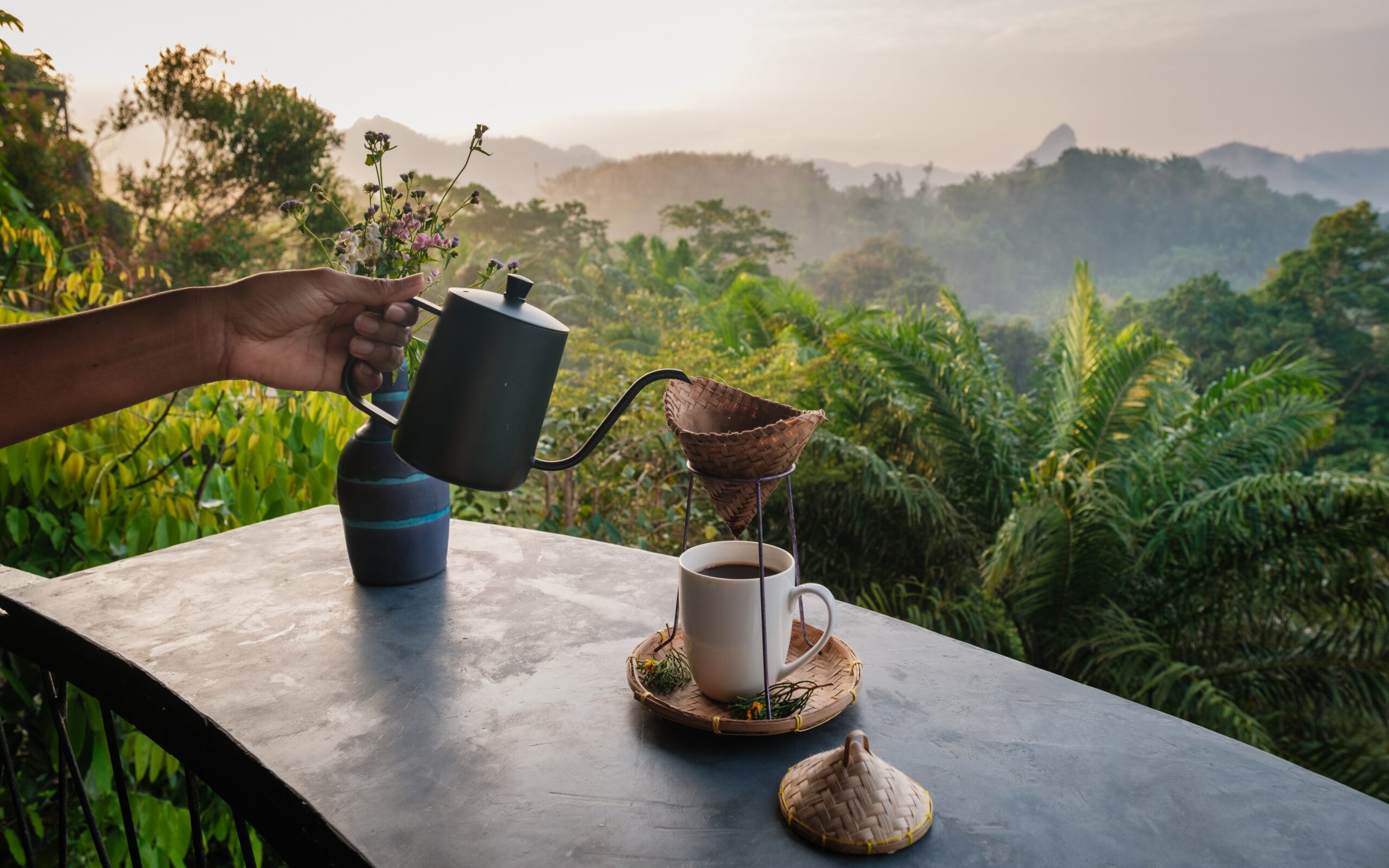
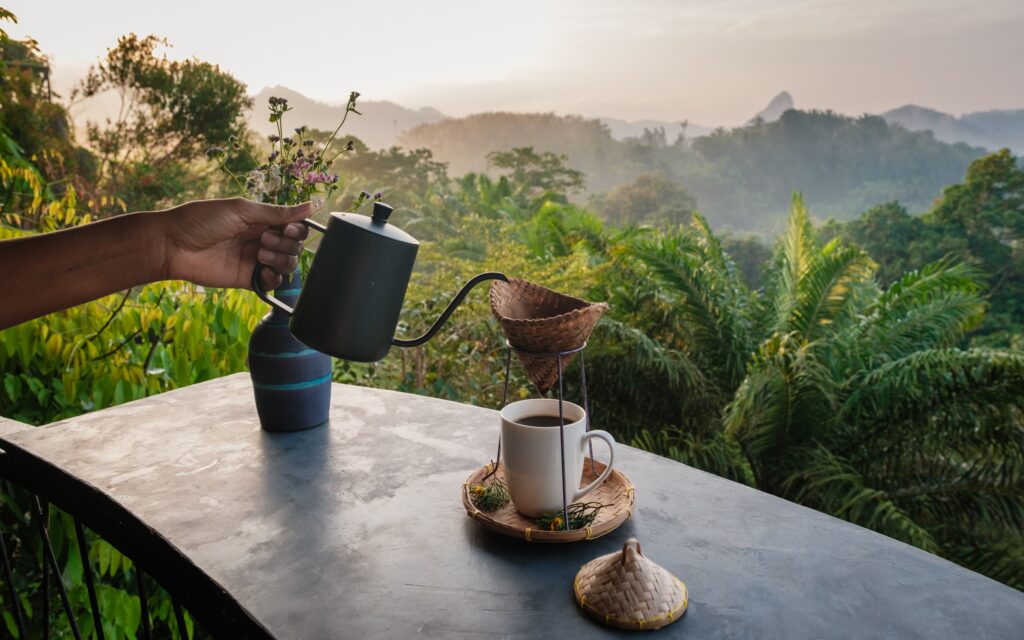
I felt it again in Thailand, hiking along humid jungle paths where the canopy filtered the light into soft green patterns. The rhythm of footsteps, breath and the occasional buzz of insects created a steady cadence. Despite the differences in culture, climate and geography, the mental response was strikingly consistent. Spaciousness and movement, it turns out, speak a language the brain understands anywhere in the world.
The Power of Awe and Perspective
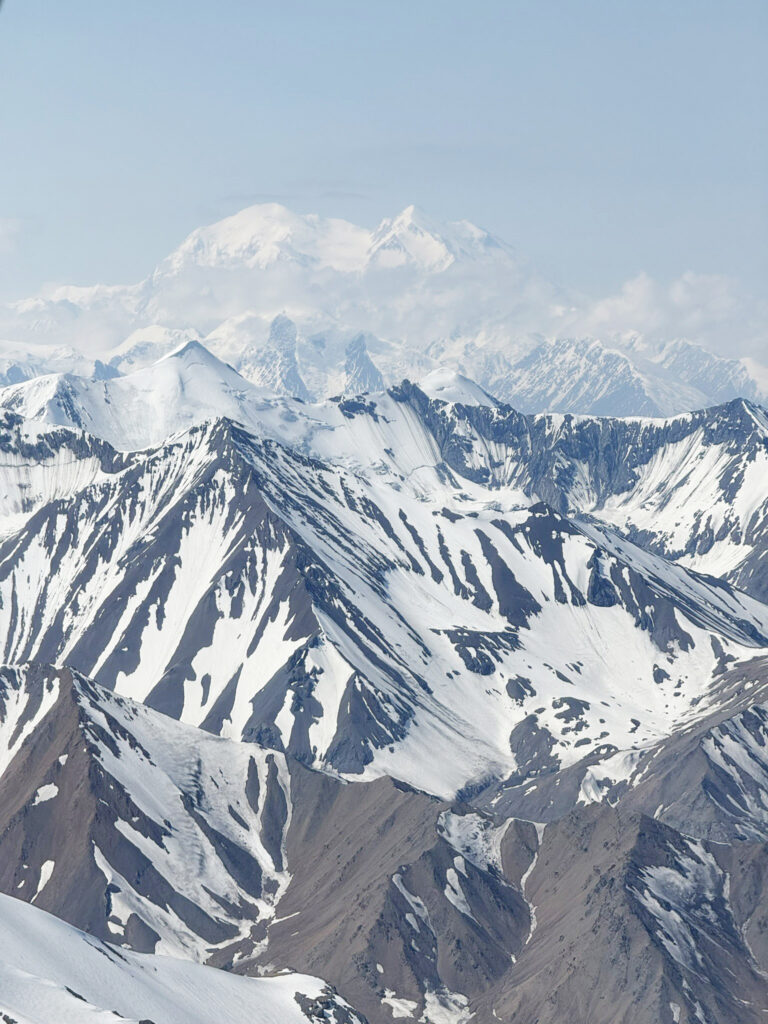
One of the most vivid moments of my Alaska journey came from the cockpit of a bush plane flying into the backcountry. As we climbed over the Alaska Range, snow-dusted peaks and glacier-carved valleys stretched in every direction. From that altitude, the landscape felt immense and humbling, and I sensed a shift in perspective — a reminder of how small my daily worries really were.
Researchers who study awe have found that experiences like this can reduce stress and expand our sense of time, making life feel less hurried. I felt that expansion not just in the air but later, standing beside the vast Black Rapids Glacier, watching the light change across its surface. There was nowhere else I needed to be, nothing else competing for my attention, and the experience felt complete.
Why Slowing Down Works
Modern life trains us to move quickly, to fill gaps, to treat stillness as unproductive. Yet the brain isn’t designed for constant stimulation. It thrives on cycles: effort and rest, focus and release. Slow travel naturally creates those cycles. Long drives, extended walks and quiet stretches of time allow thoughts to settle and emotions to process without force.
What I’ve learned is that the destination matters far less than the conditions. The therapeutic effect comes not from where you are but from how you move through a place. Wide horizons, rhythmic motion and reduced sensory input create a form of moving meditation, whether you’re crossing tundra, farmland or jungle.
Bringing the Practice Home
You don’t need to travel to Alaska to experience this shift. The principles are simple and accessible anywhere:
- Take a drive without music or podcasts and let your mind wander.
- Choose routes that loop rather than retrace the same path.
- Walk long enough to find a steady rhythm.
- Seek out places with open views: a shoreline, a valley, even a quiet country road.
- Allow time to be unstructured, free from constant checking and planning.
These small choices create space for the mind to reset, much like sleep resets the body.
The Road as Teacher
On my final day in Alaska, I pulled over as a moose ambled across the road ahead of me. There was no impatience, no sense of interruption — just the simple act of waiting. In that pause, I realised that slow travel isn’t about covering less ground. It’s about noticing more of what unfolds along the way, including the subtle changes within us.
Wide-open places don’t just show us their landscapes. They show us how it feels to move through the world without hurry, to let thoughts rise and fall like passing scenery. And long after the journey ends, that rhythm — the steady, quiet cadence of forward motion — has a way of staying with you, reminding you that sometimes the most meaningful progress happens at the speed of a calm mind.